VE Without Losing the Design: A Lighting Designer’s Guide to Reviewing Alternatives
Value engineering (VE) is a normal part of the design and construction process, but good VE should not mean simply choosing the least expensive fixture. For lighting designers, the goal is to identify where savings can be achieved without compromising design intent, performance, or the owner’s long-term investment.
Below are a few considerations when reviewing or preventing lighting VE.
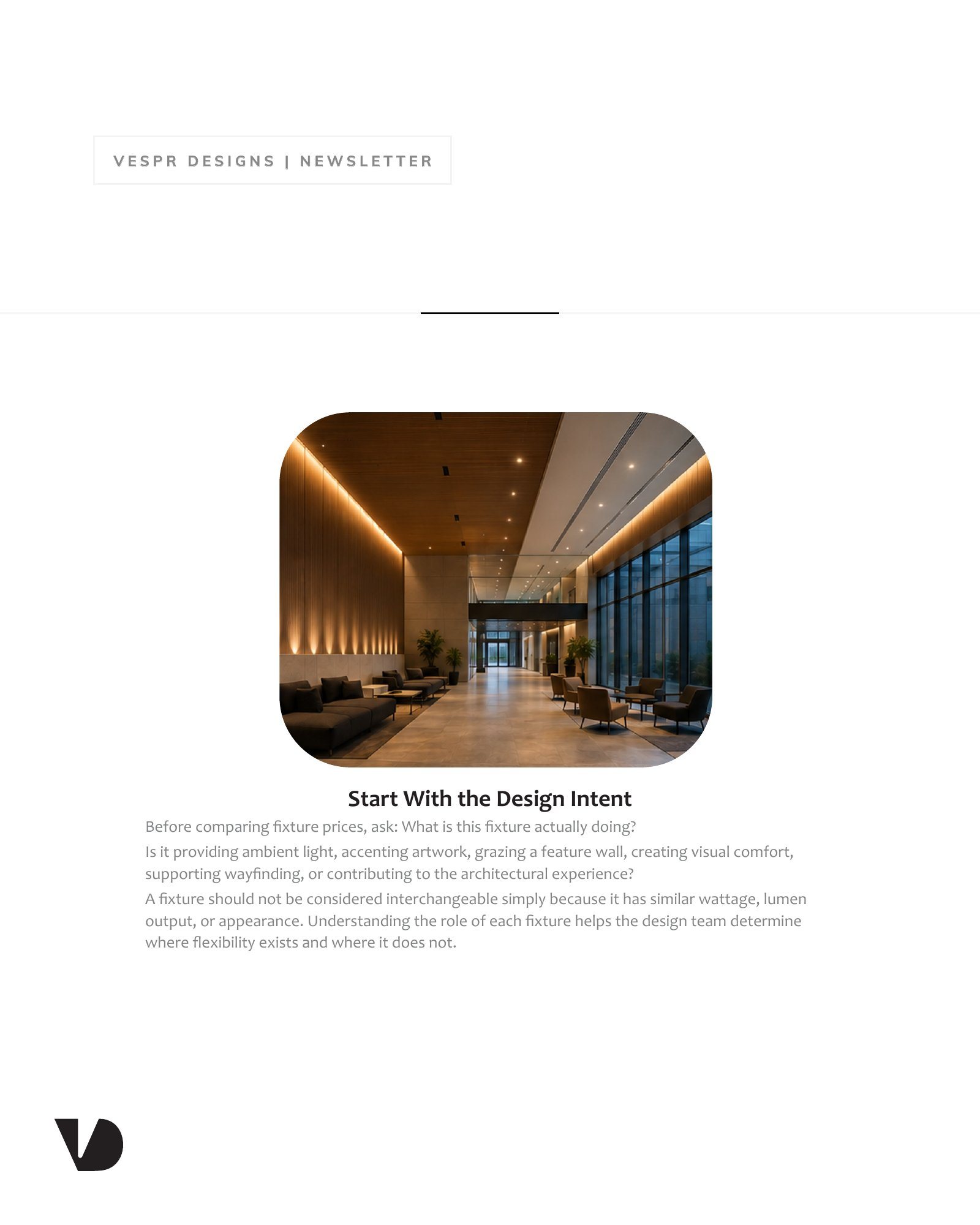
Start With the Design Intent
Before comparing fixture prices, ask: What is this fixture actually doing? Is it providing ambient light, accenting artwork, grazing a feature wall, creating visual comfort, supporting wayfinding, or contributing to the architectural experience?
A fixture should not be considered interchangeable simply because it has similar wattage, lumen output, or appearance. Understanding the role of each fixture helps the design team determine where flexibility exists and where it does not.
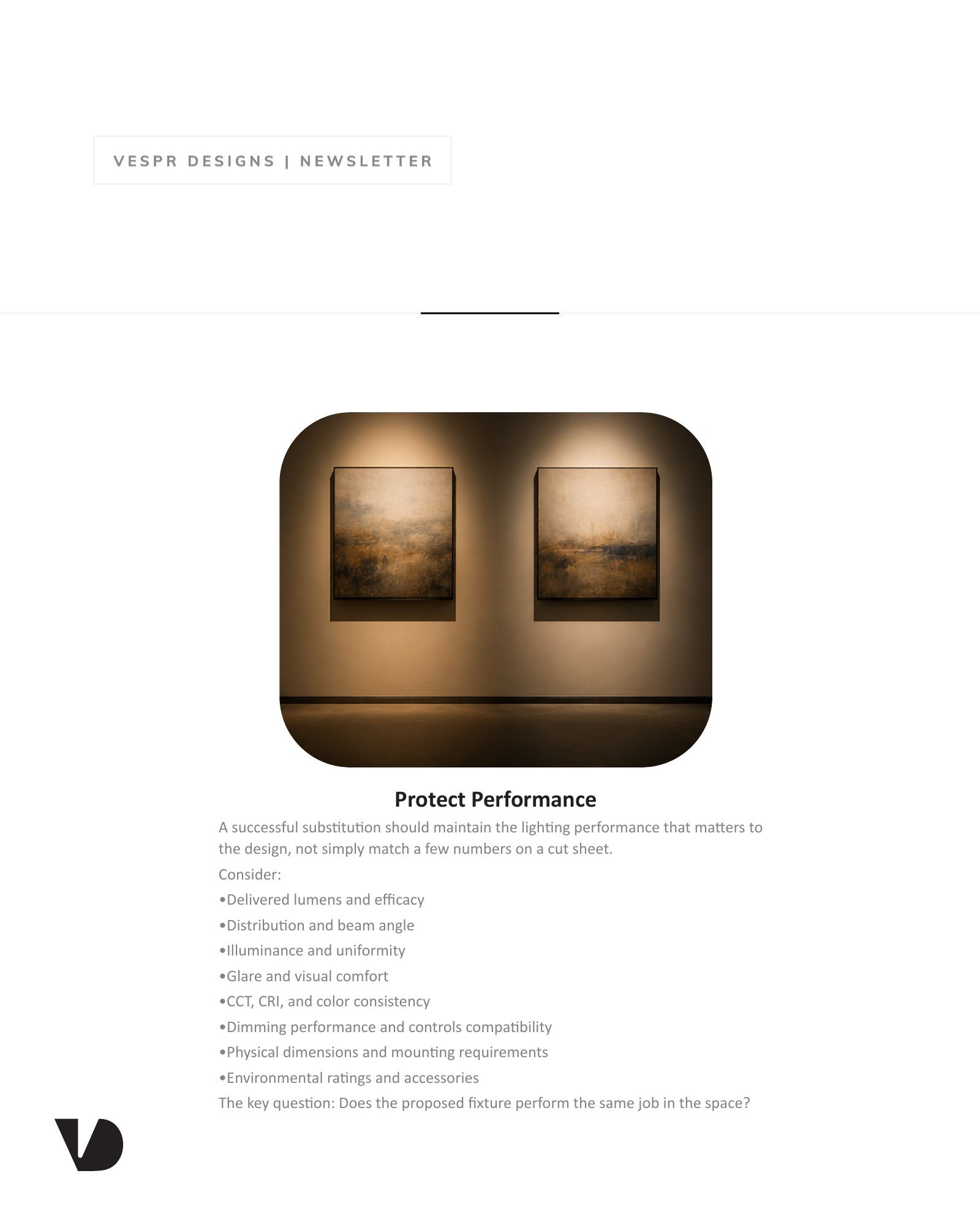
Protect Performance
A successful substitution should maintain the lighting performance that matters to the design, not simply match a few numbers on a cut sheet. Consider:
Delivered lumens and efficacy
Distribution and beam angle
Illuminance and uniformity
Glare and visual comfort
CCT, CRI, and color consistency
Dimming performance and controls compatibility
Physical dimensions and mounting requirements
Environmental ratings and accessories
The key question: Does the proposed fixture perform the same job in the space?
Look Beyond the Fixture Cost
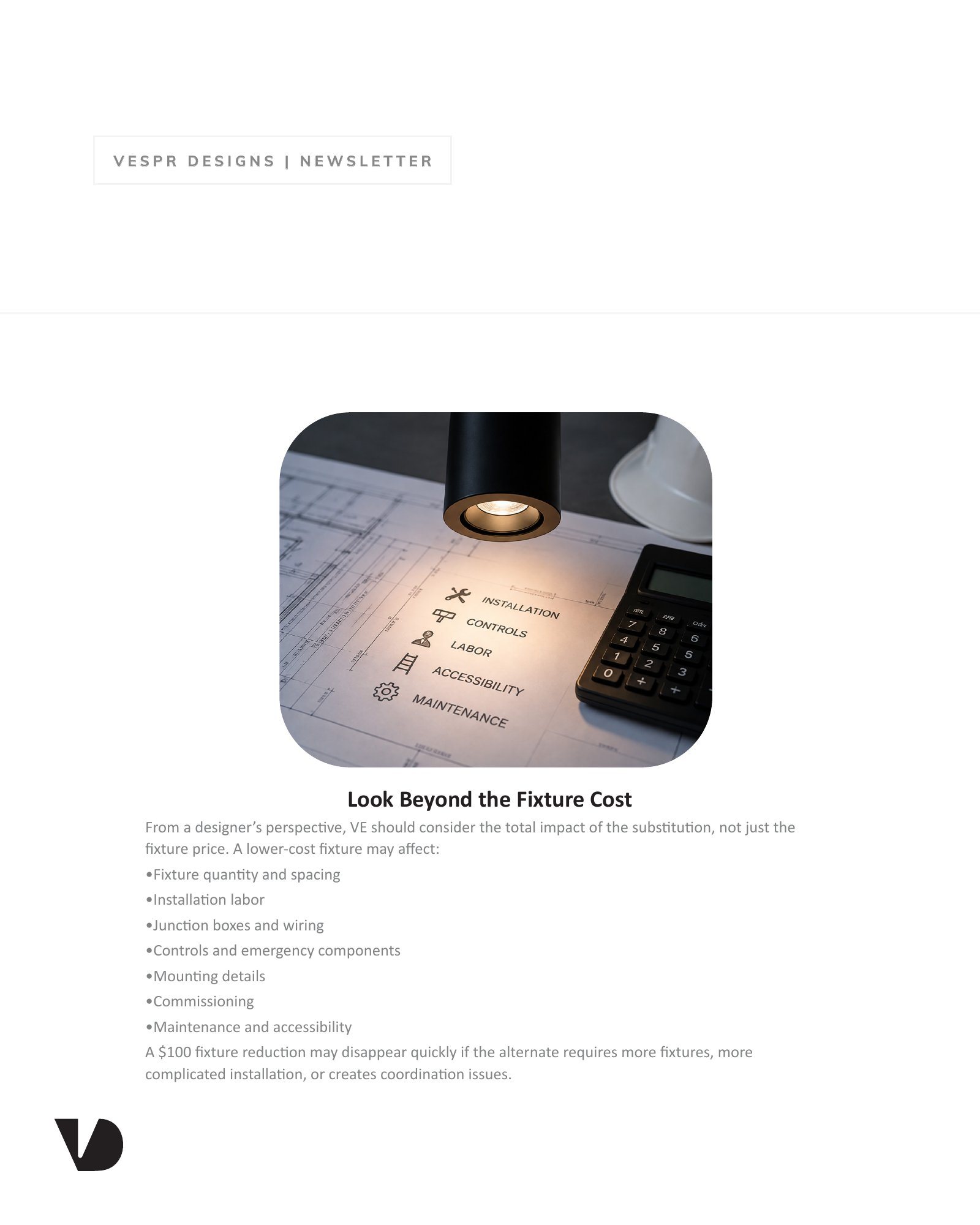
From a designer’s perspective, VE should consider the total impact of the substitution, not just the fixture price. A lower-cost fixture may affect:
Fixture quantity and spacing
Installation labor
Junction boxes and wiring
Controls and emergency components
Mounting details
Commissioning
Maintenance and accessibility
A $100 fixture reduction may disappear quickly if the alternate requires more fixtures, more complicated installation, or creates coordination issues.
Design Teams Can Prevent VE Before It Happens
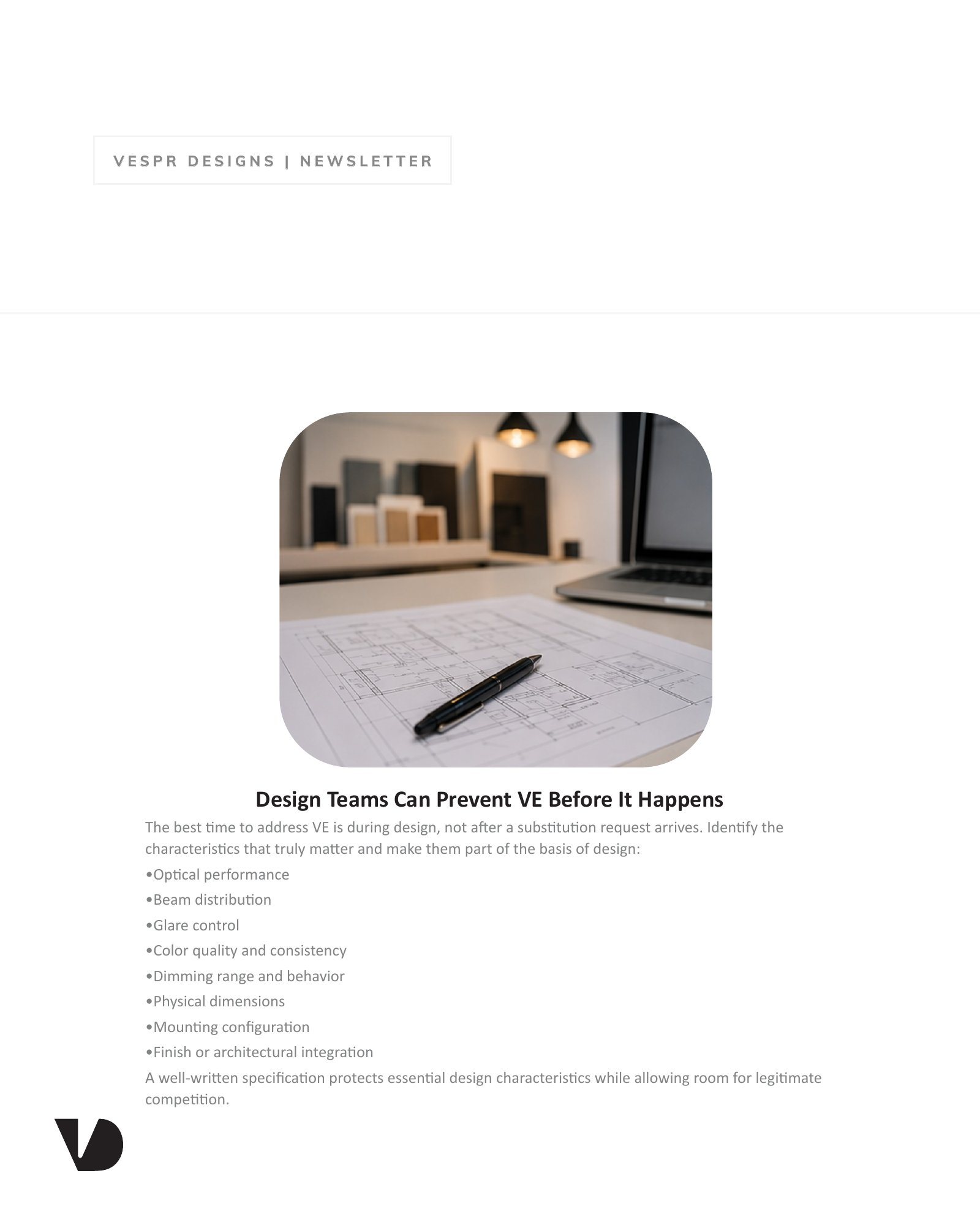
The best time to address VE is during design, not after a substitution request arrives. Identify the characteristics that truly matter and make them part of the basis of design:
Optical performance
Beam distribution
Glare control
Color quality and consistency
Dimming range and behavior
Physical dimensions
Mounting configuration
Finish or architectural integration
A well-written specification protects essential design characteristics while allowing room for legitimate competition.
Identify Where VE Has the Greatest Design Impact
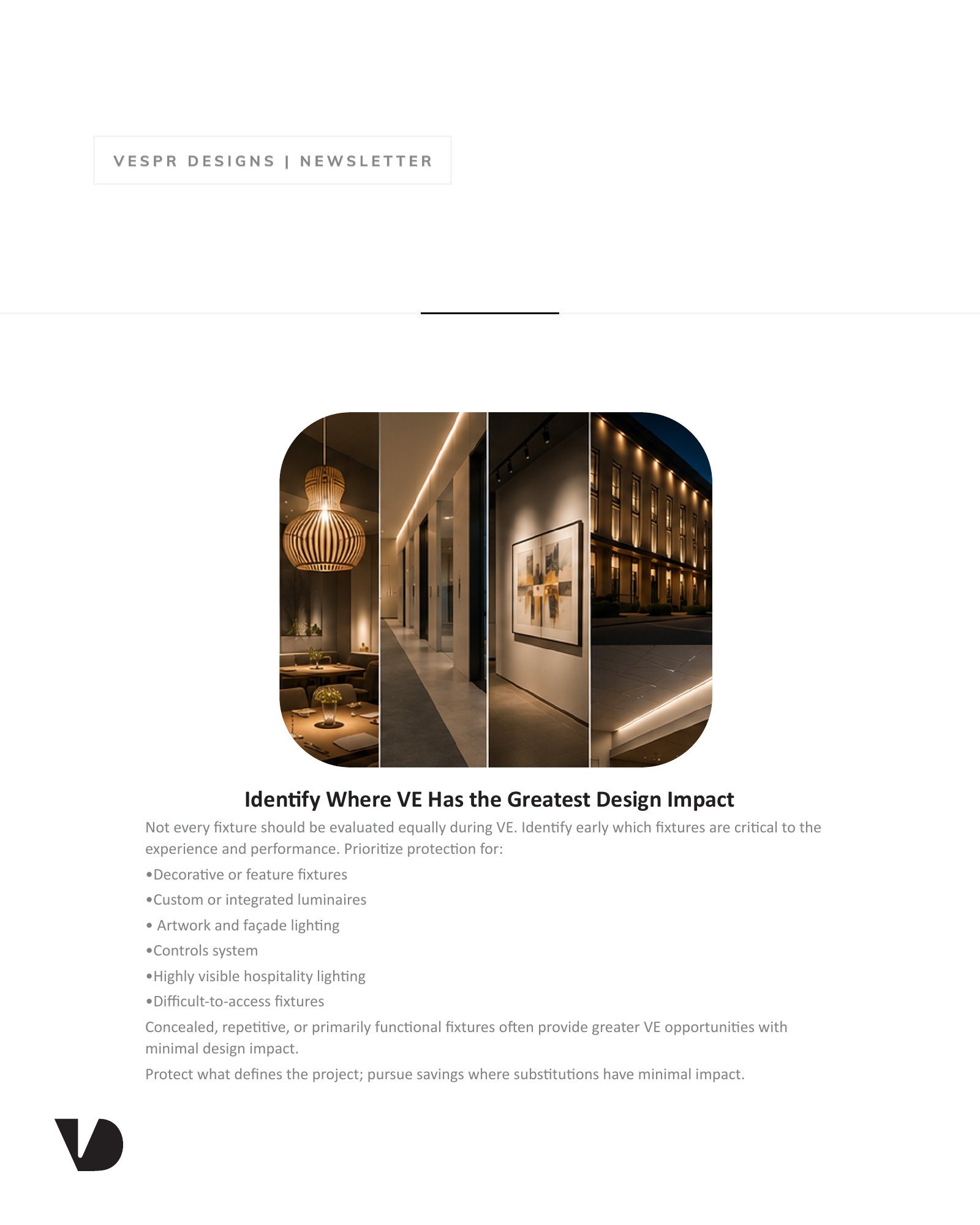
Not every fixture should be evaluated equally during VE. Identify early which fixtures are critical to the experience and performance. Prioritize protection for:
Decorative or feature fixtures
Custom or integrated luminaires
Artwork and facade lighting
Controls system
Highly visible hospitality lighting
Difficult-to-access fixtures
Concealed, repetitive, or primarily functional fixtures often provide greater VE opportunities with minimal design impact.
Protect what defines the project; pursue savings where substitutions have minimal impact.
Define the Criteria and Verify the Alternate
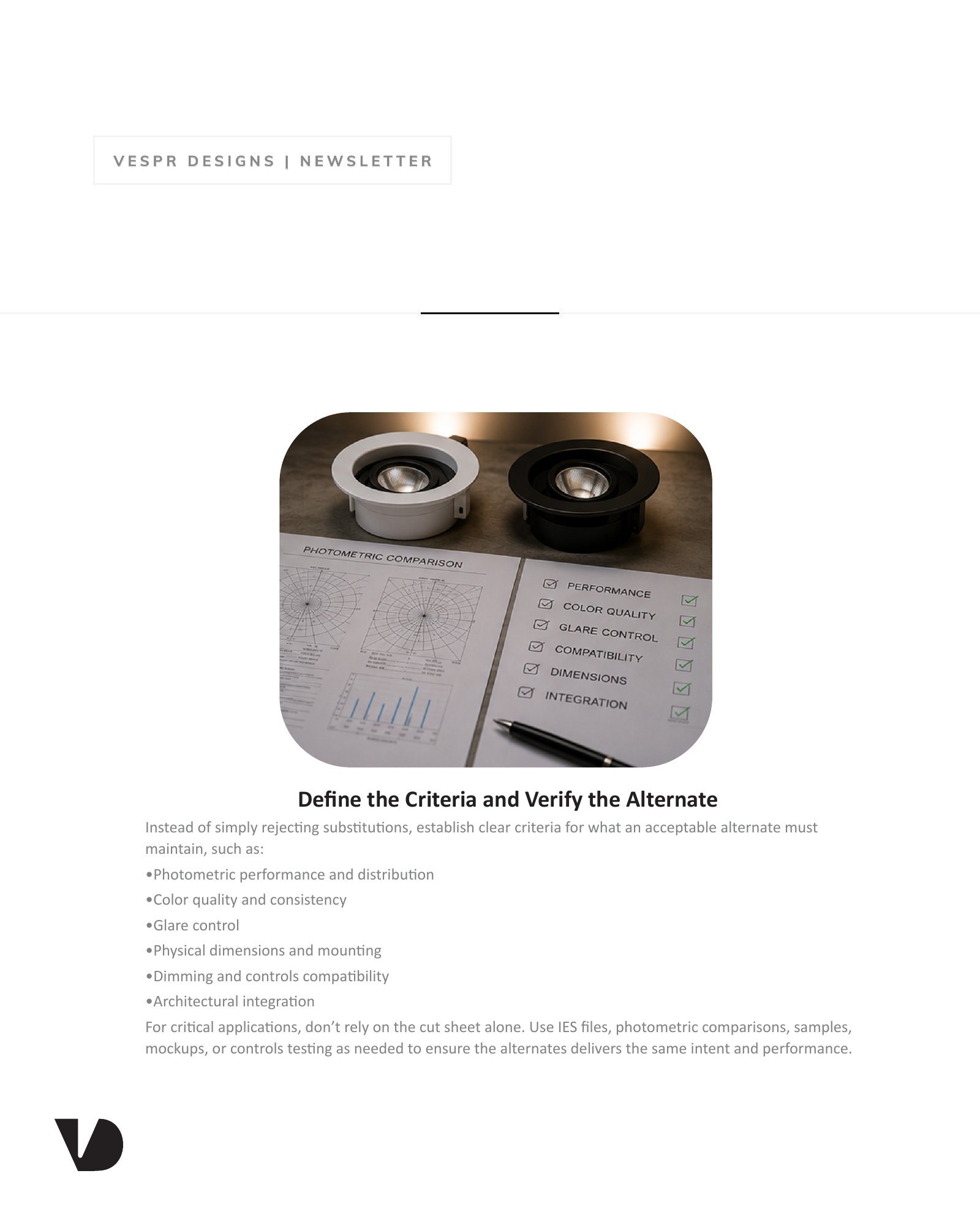
Instead of simply rejecting substitutions, establish clear criteria for what an acceptable alternate must maintain, such as:
Photometric performance and distribution
Color quality and consistency
Glare control
Physical dimensions and mounting
Dimming and controls compatibility
Architectural integration
For critical applications, don’t rely on the cut sheet alone. Use IES files, photometric comparisons, samples, mockups, or controls testing as needed to ensure the alternate delivers the same intent and performance.
Good lighting VE isn’t about finding the cheapest fixture. It’s about understanding what makes the design work, protecting what matters, and finding opportunities for savings where flexibility has the least impact on design intent.
See the original newsletter (9 pages)