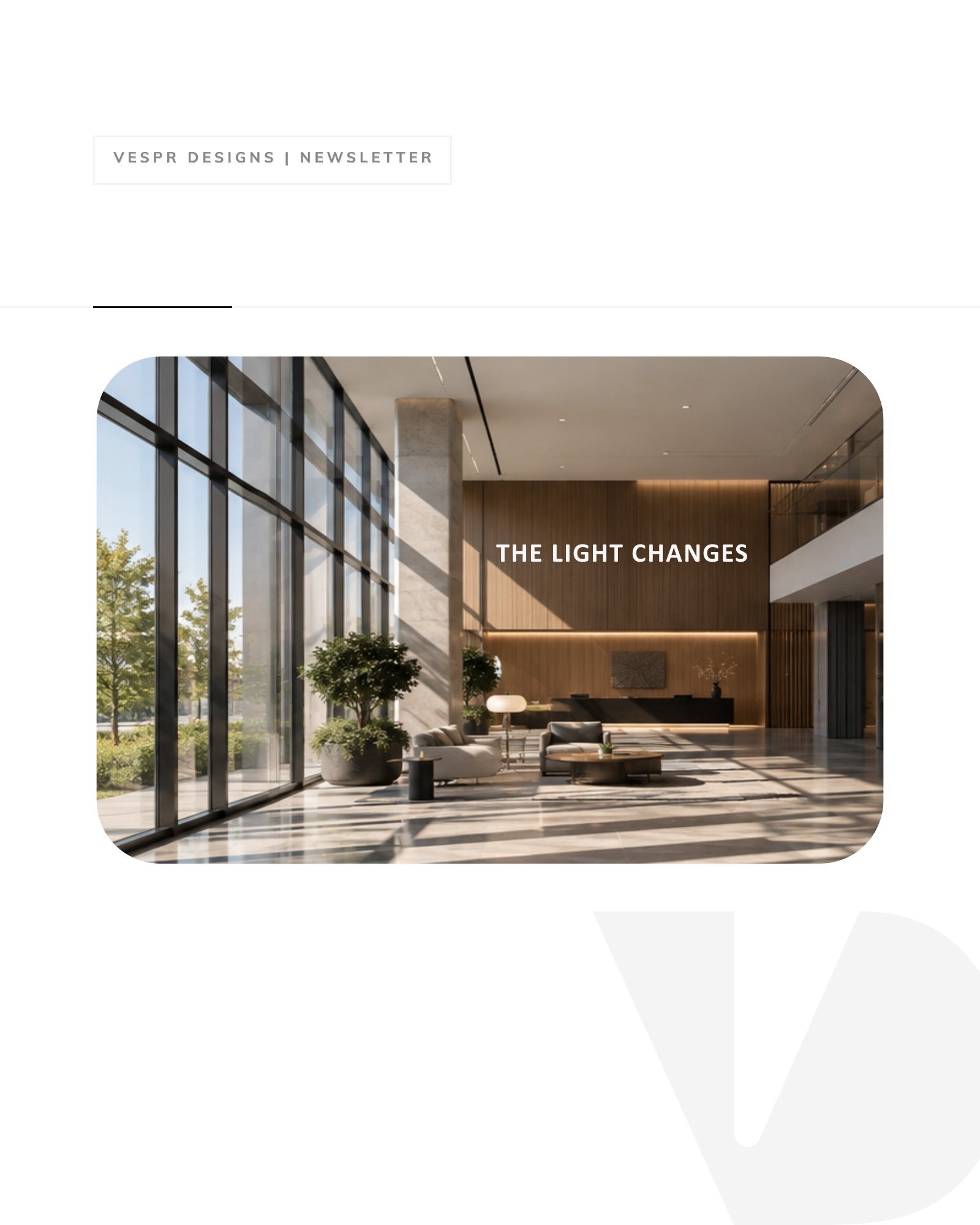
The Light Changes: Why Electric Lighting Should Respond to the Seasons
We design buildings to respond to their environment, orienting windows toward the sun, framing views, and bringing daylight inside. But there is something easy to forget: the sun doesn’t stay in the same place.
A room with the same windows can feel completely different in June than it does in December. The sun’s path changes, days become shorter, and daylight reaches different depths within the space.
So here’s a question worth asking: If daylight changes every day, why do we so often design electric lighting as though nothing changes?
From Summer to Winter
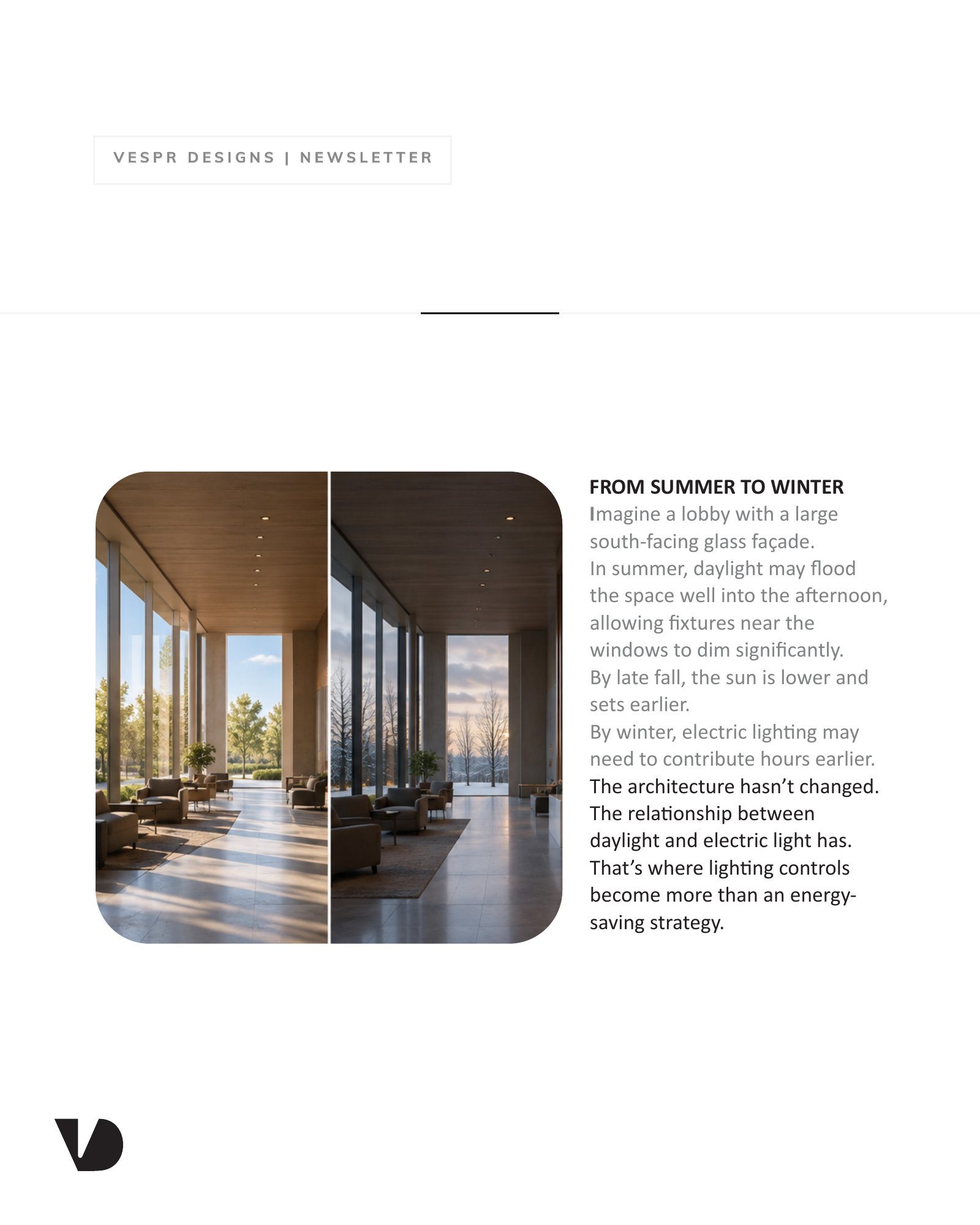
Imagine a lobby with a large south-facing glass facade. In summer, daylight may flood the space well into the afternoon, allowing fixtures near the windows to dim significantly. By late fall, the sun is lower and sets earlier. By winter, electric lighting may need to contribute hours earlier.
The architecture hasn’t changed. The relationship between daylight and electric light has. That’s where lighting controls become more than an energy-saving strategy.
Design the Transition
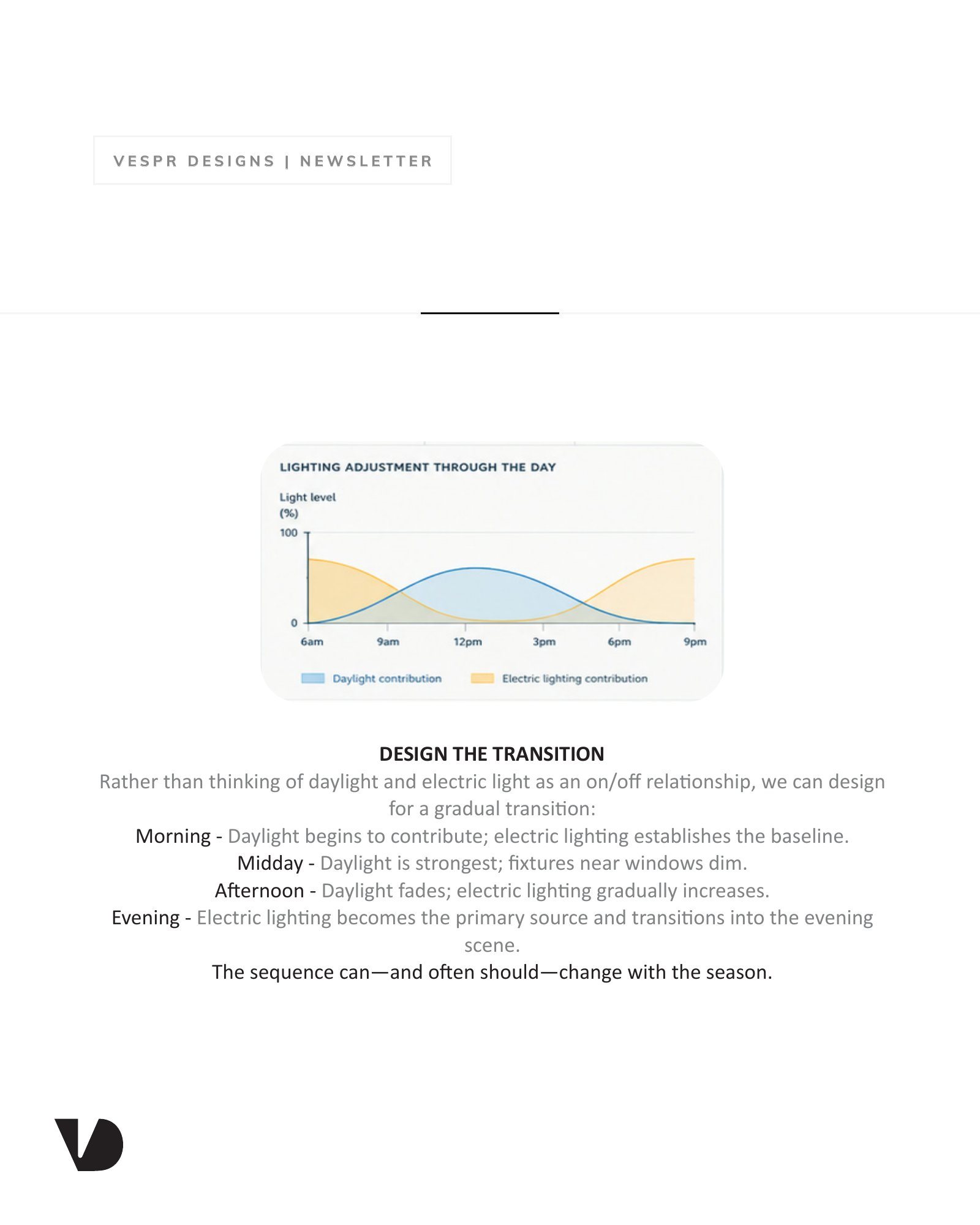
Rather than thinking of daylight and electric light as an on/off relationship, we can design for a gradual transition:
Morning, Daylight begins to contribute; electric lighting establishes the baseline.
Midday, Daylight is strongest; fixtures near windows dim.
Afternoon, Daylight fades; electric lighting gradually increases.
Evening, Electric lighting becomes the primary source and transitions into the evening scene.
The sequence can, and often should, change with the season.
Think in Zones
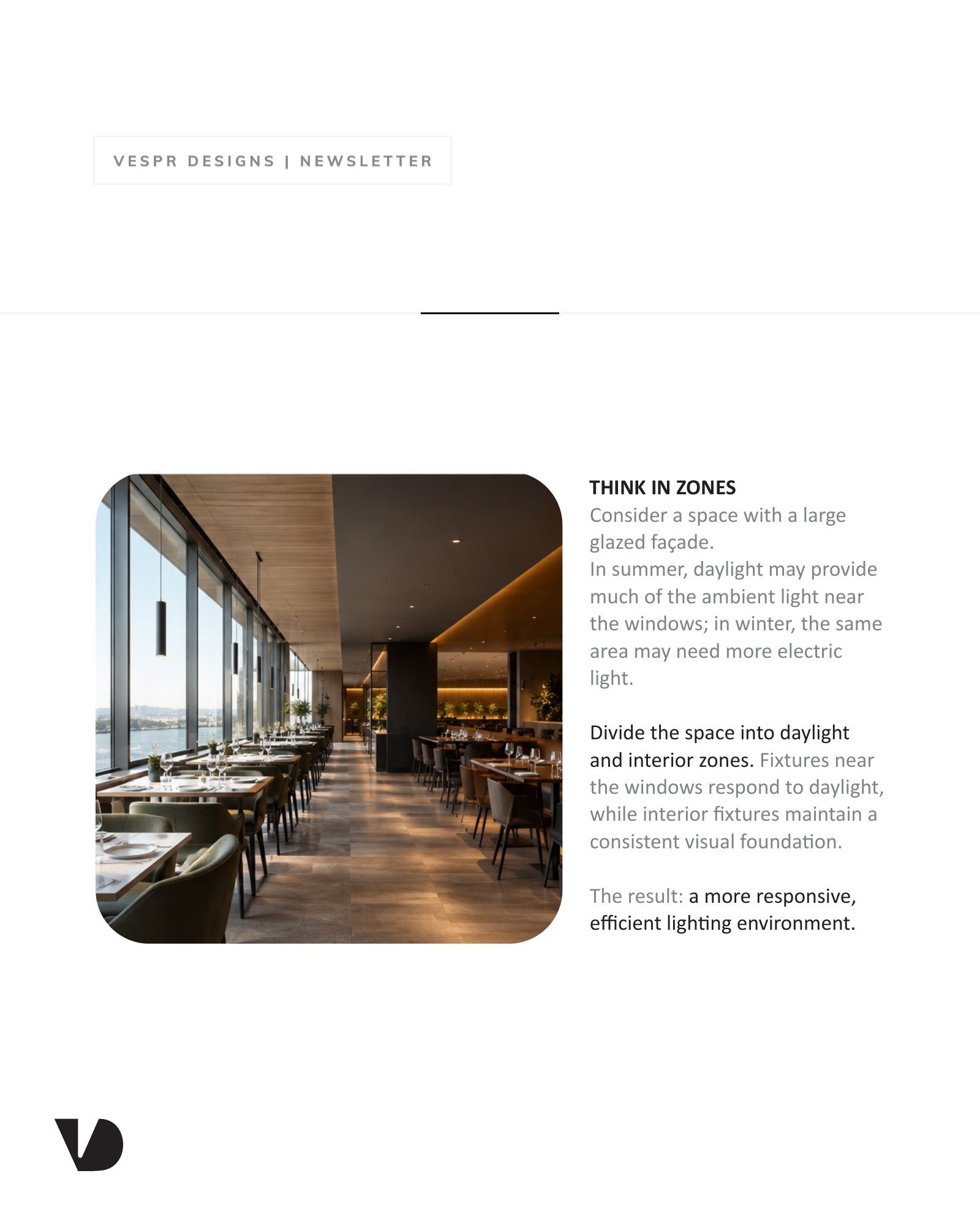
Consider a space with a large glazed facade. In summer, daylight may provide much of the ambient light near the windows; in winter, the same area may need more electric light.
Divide the space into daylight and interior zones. Fixtures near the windows respond to daylight, while interior fixtures maintain a consistent visual foundation.
The result: a more responsive, efficient lighting environment.
And Then There’s Color
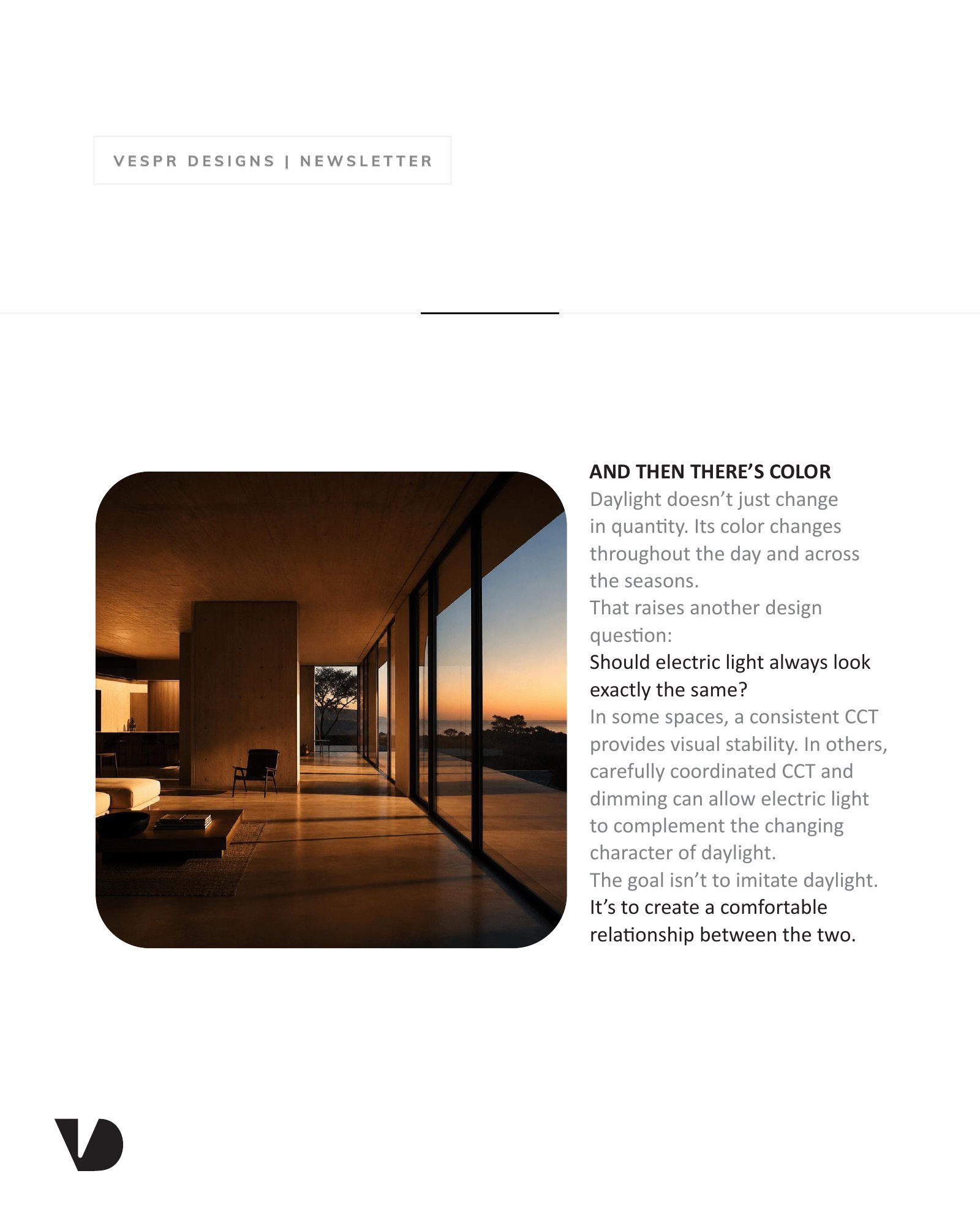
Daylight doesn’t just change in quantity. Its color changes throughout the day and across the seasons. That raises another design question: Should electric light always look exactly the same?
In some spaces, a consistent CCT provides visual stability. In others, carefully coordinated CCT and dimming can allow electric light to complement the changing character of daylight.
The goal isn’t to imitate daylight. It’s to create a comfortable relationship between the two.
Design for the Year, Not the Snapshot
Daylight is never static. It shifts with the time of day, season, and sky. Ask: How should electric lighting respond as daylight changes?
Good lighting doesn’t compete with daylight. It works with it. Design for the changing light, not just the snapshot.
See the original newsletter (7 pages)