Evening Glow
Light doesn’t just help us see, it shapes how we sleep, wake, and feel throughout the day. From the direction and color of our evening lamps to the brightness of daylight we get each morning, every cue sends a message to our internal clock. In this issue, we explore how thoughtful lighting, its placement, tone, and timing, can support a healthier circadian rhythm. Small changes in how you light your day and night can lead to deeper rest, steadier energy, and a stronger connection to the natural rhythm that your body depends on.
How We See Light
To understand how light influences our sleep, we first need to look at how the eye processes it. When light enters the eye, the photoreceptors, rods and cones, in the retina convert it into electrical signals that the brain interprets as vision. Rods are responsible for brightness and vision in low light, while cones detect color and fine detail under brighter conditions.
Our eyes and bodies are naturally tuned to the rhythm of the sun, bright days and dim nights. The best lighting for healthy sleep supports this natural cycle by helping to regulate our body’s internal clock. Bright, full-spectrum light during the day promotes alertness and energy, while warm, low-level light in the evening helps us relax and prepare for rest.
Even if we spend much of our time indoors, we can recreate these natural patterns through thoughtful use of electric light, adjusting color temperature, intensity, and placement, to align our environments with our biological rhythms and encourage more restorative sleep.
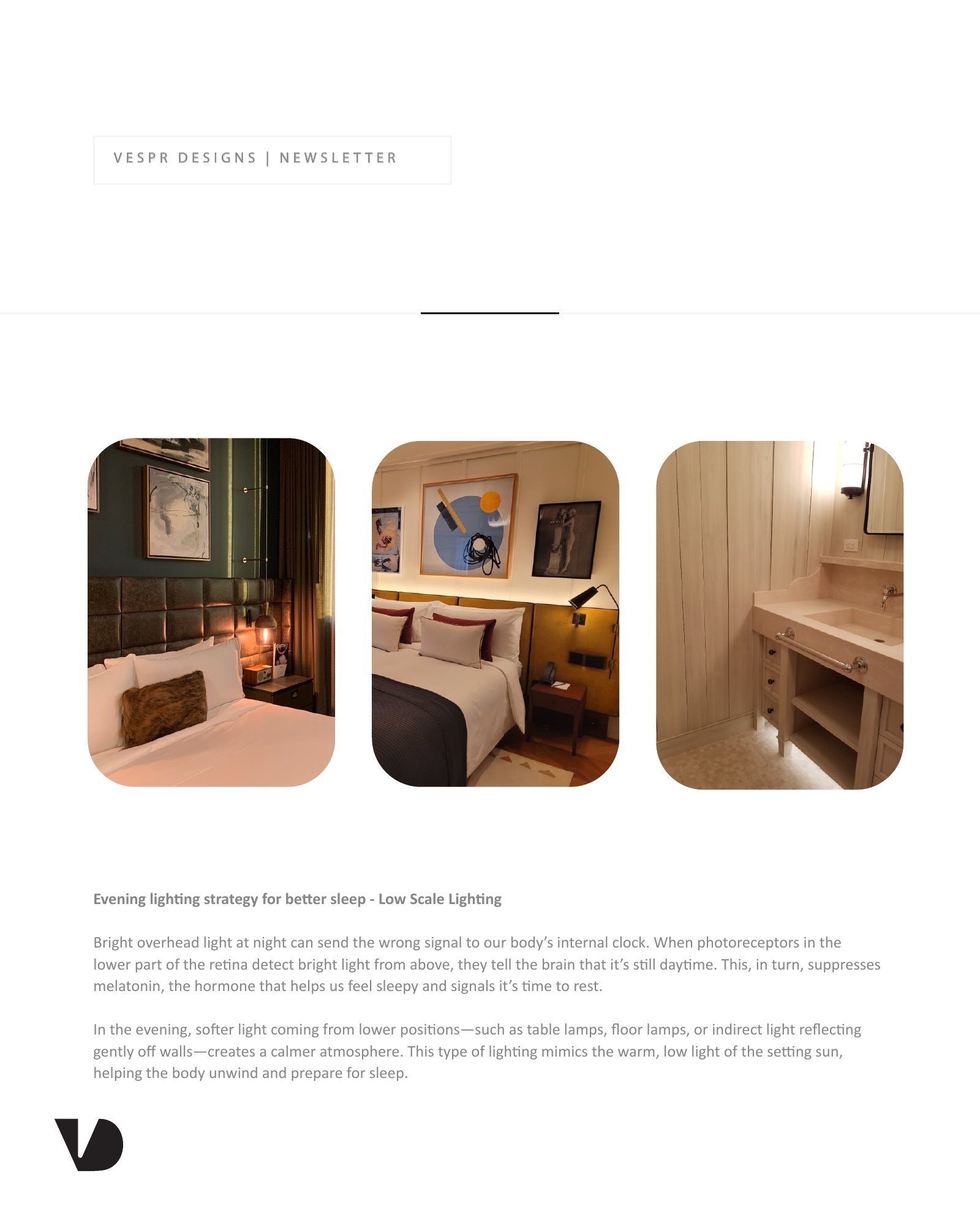
Evening Lighting Strategy for Better Sleep: Low-Scale Lighting
Bright overhead light at night can send the wrong signal to our body’s internal clock. When photoreceptors in the lower part of the retina detect bright light from above, they tell the brain that it’s still daytime. This, in turn, suppresses melatonin, the hormone that helps us feel sleepy and signals it’s time to rest.
In the evening, softer light coming from lower positions, such as table lamps, floor lamps, or indirect light reflecting gently off walls, creates a calmer atmosphere. This type of lighting mimics the warm, low light of the setting sun, helping the body unwind and prepare for sleep.
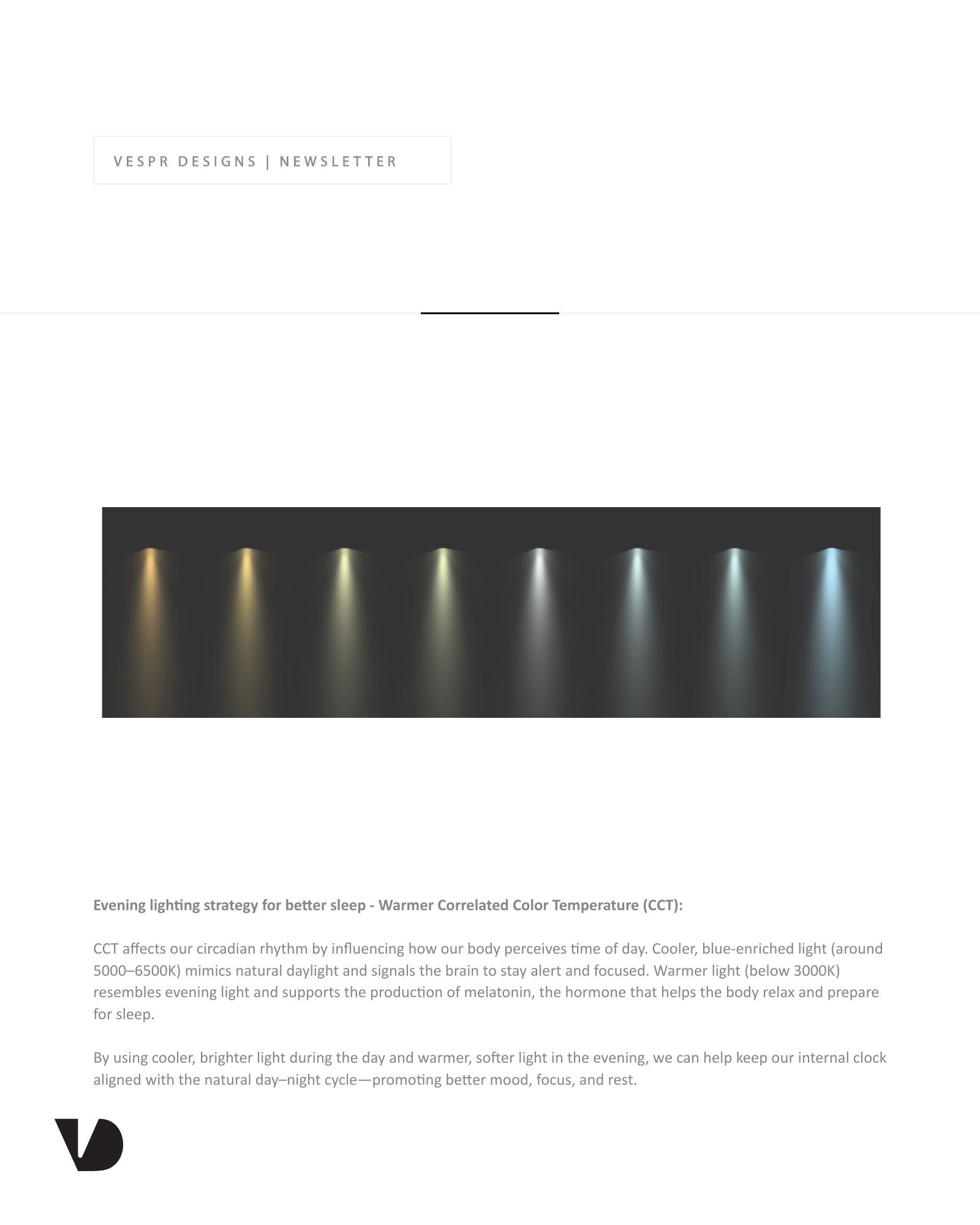
Evening Lighting Strategy for Better Sleep: Warmer Correlated Color Temperature (CCT)
CCT affects our circadian rhythm by influencing how our body perceives time of day. Cooler, blue-enriched light (around 5000, 6500K) mimics natural daylight and signals the brain to stay alert and focused. Warmer light (below 3000K) resembles evening light and supports the production of melatonin, the hormone that helps the body relax and prepare for sleep.
By using cooler, brighter light during the day and warmer, softer light in the evening, we can help keep our internal clock aligned with the natural day, night cycle, promoting better mood, focus, and rest.
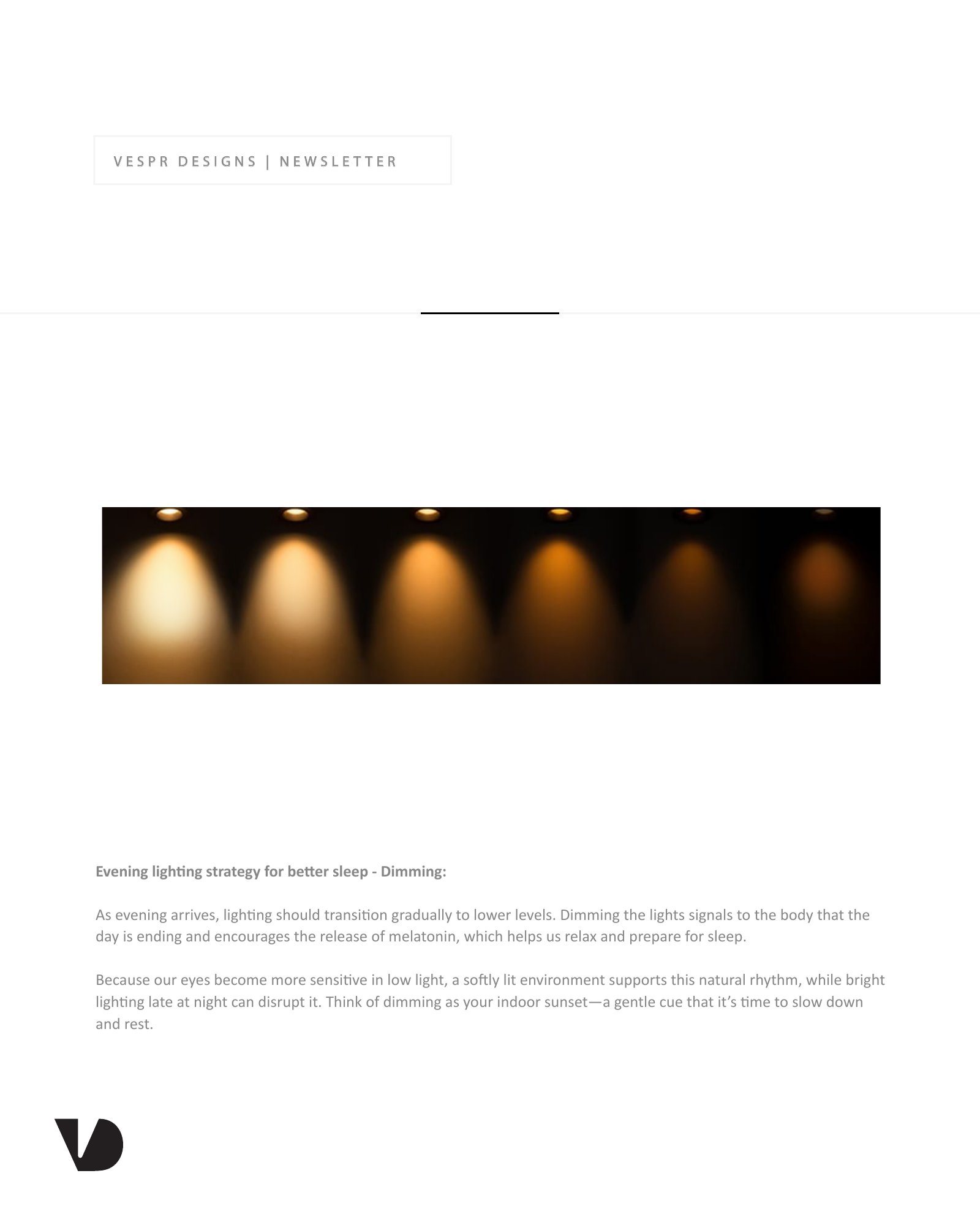
Evening Lighting Strategy for Better Sleep: Dimming
As evening arrives, lighting should transition gradually to lower levels. Dimming the lights signals to the body that the day is ending and encourages the release of melatonin, which helps us relax and prepare for sleep.
Because our eyes become more sensitive in low light, a softly lit environment supports this natural rhythm, while bright lighting late at night can disrupt it. Think of dimming as your indoor sunset, a gentle cue that it’s time to slow down and rest.
Preparing for good sleep doesn’t start at bedtime, it begins with how you experience light throughout the day. Exposure to natural sunlight during the day helps regulate your body’s internal clock, while warmer, dimmer light in the evening signals it’s time to wind down.
When you let light guide your daily rhythm, rest comes more naturally, less as a struggle and more as a gentle conclusion to the day. With just a few mindful lighting choices, every sunrise and sunset can work in your favor.
See the original newsletter (6 pages)