Lighting the Modern Facade: Techniques for Illuminating Glass
As the season of light approaches, it’s a perfect moment to explore how illumination can transform architectural glass, from frit patterns to gradient textures, into vibrant, dimensional surfaces. Thoughtful lighting can reveal detail, enhance transparency or opacity, and give a facade its signature nighttime presence. In this issue, we share practical strategies for grazing, backlighting, and creating controlled glow effects that elevate the visual impact of facade glass. Consider it a little “holiday sparkle” for your lighting toolkit. We will examine these techniques using precedent projects around New York City.
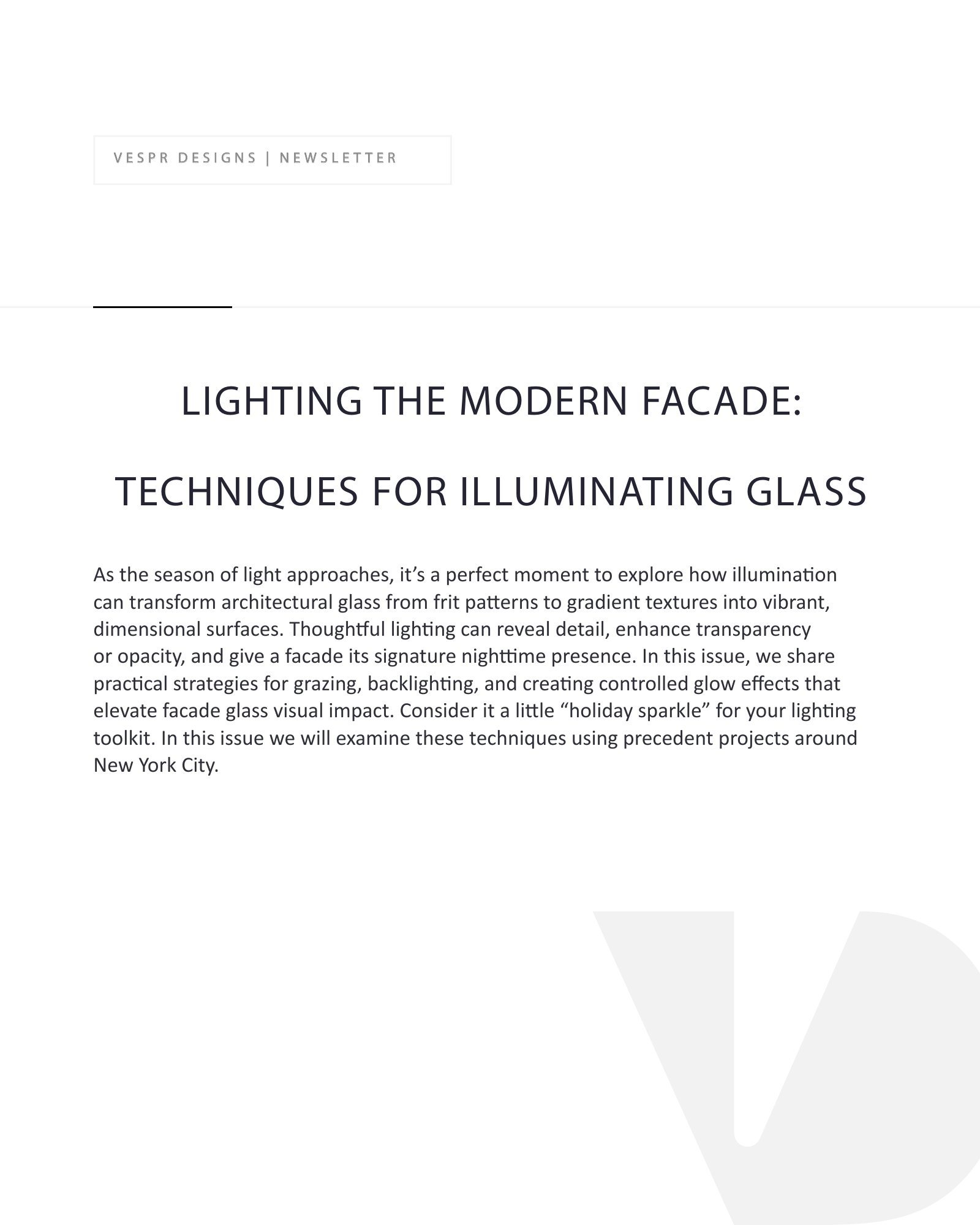
Even Glow: Backlighting a Solid Surface Behind Glass
Reference project (by others): Lincoln Center, David Geffen Hall, New York, NY.
Technique:
Uniformly illuminate the surface of a back panel, light box, or reflective cavity directly behind the glass.
Study luminaire spacing and setback from the back panel to avoid hot spots and create even illumination.
Integrate reflective sidewalls or a high-reflectance backer to maximize uniformity and efficiency.
Ensure the frit density and pattern on the glass, if any, are coordinated with the lighting level to achieve the desired glow.
Result:
Creates a smooth, internally glowing facade that reads as calm, modern, and monolithic.
Produces a strong nighttime identity with a gentle, atmospheric radiance rather than a directional beam.
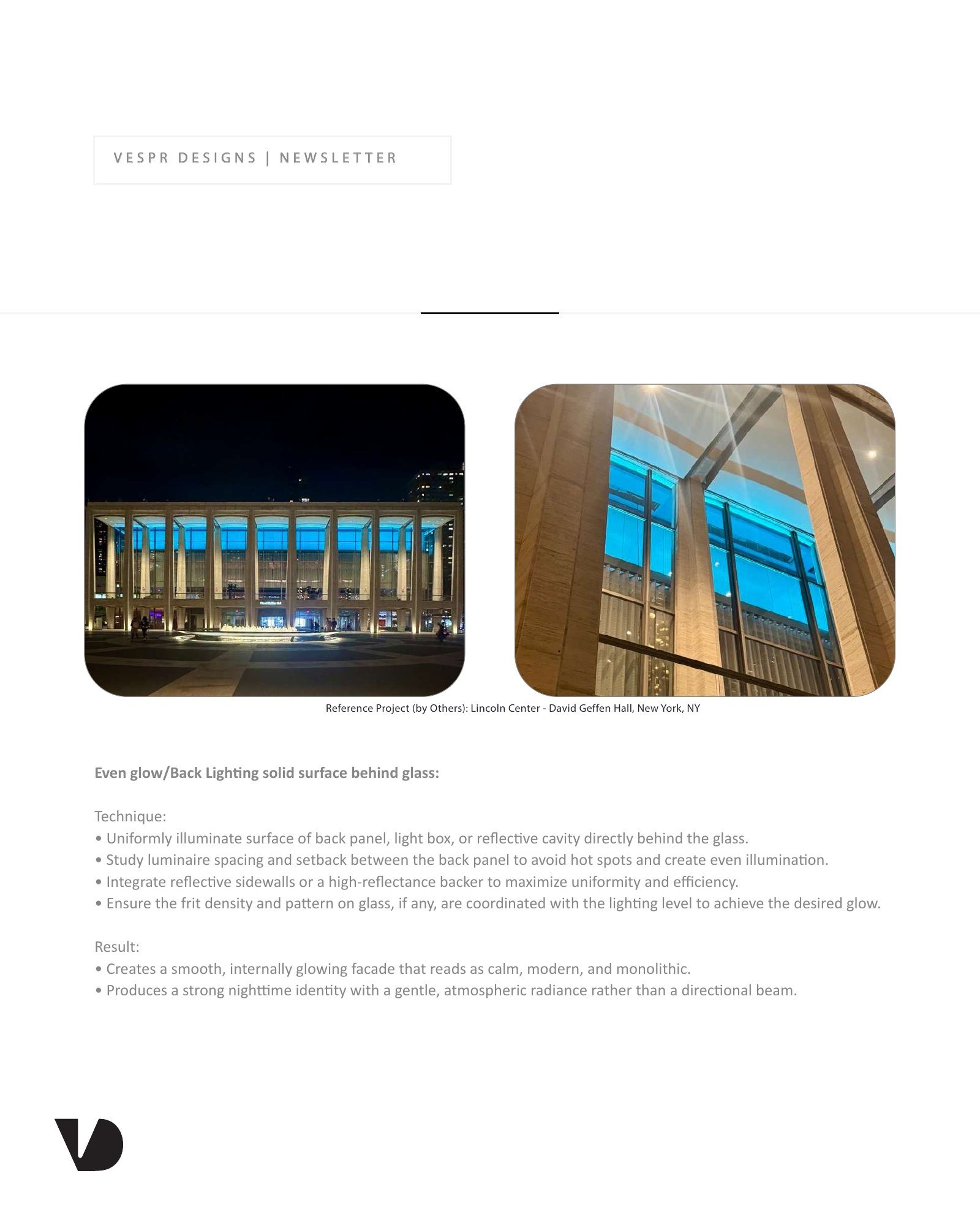
Grazing Light to Reveal Textured or Fritted Glass
Reference projects (by others): Solow Residential, New York, NY; One Hudson Yards, New York, NY.
Technique:
Position a linear grazer close to the glass surface, typically 1, 3 inches off the plane, to skim light across the textured or fritted glass.
Aim the beam parallel to the facade so the light rakes over the frit, emphasizing its texture and density variations.
Select a narrow-beam optic to create crisp highlights and defined shadowing within the fritted surface.
Coordinate fixture placement with mullions or recessed channels to preserve clean sightlines while maintaining the grazing angle.
Adjust output and aiming to balance contrast, enough to reveal texture without overpowering transparency.
Result:
Creates a lively, tactile read at night, shifting the glass from a flat plane to a detailed, dimensional surface.
Highlights and shadows play across the frit or textured glass, enhancing depth and making patterns more expressive and legible from a distance.
Creates a crisp, contemporary glow-with-contrast effect that elevates the facade’s visual presence.
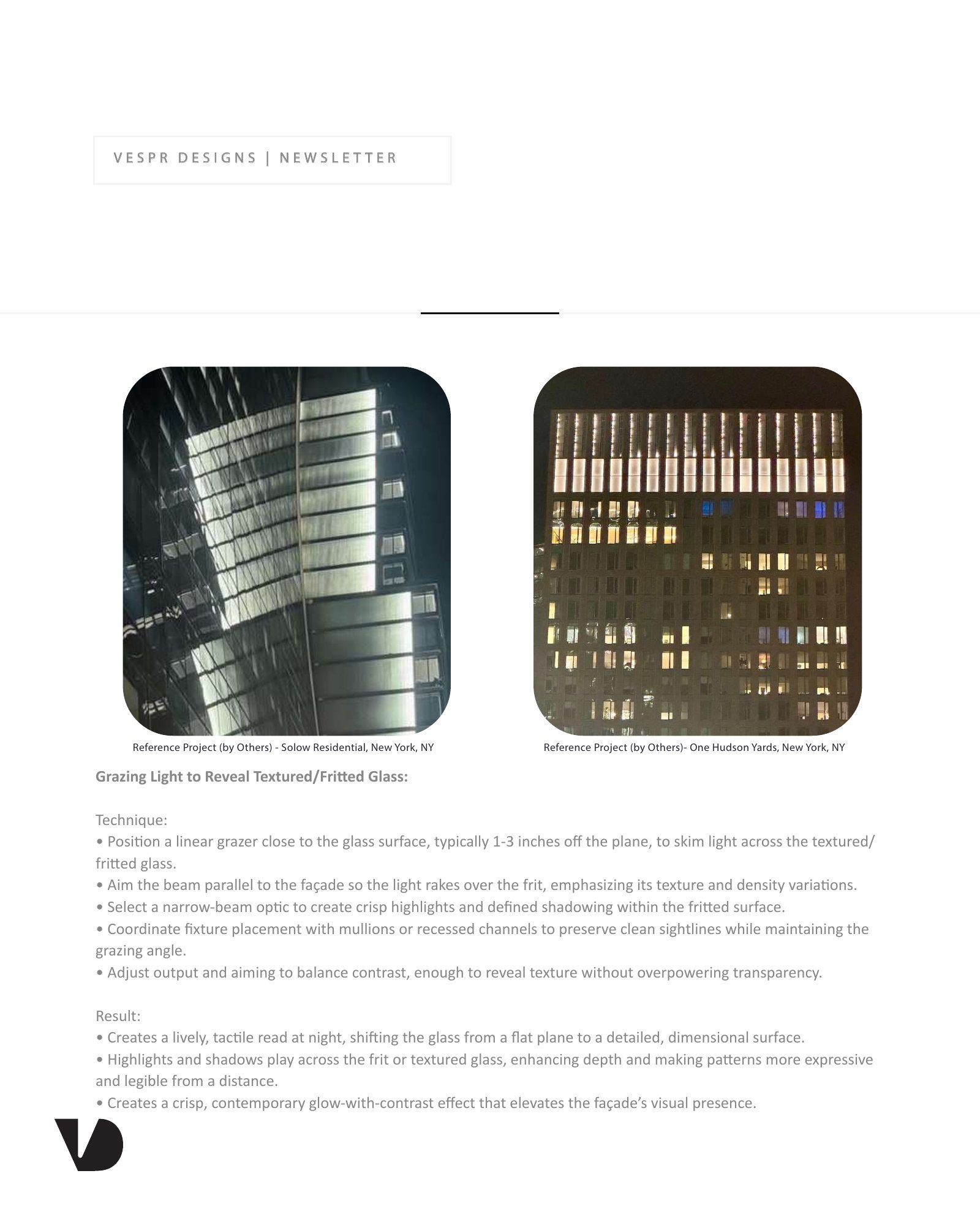
Washed Interior Mesh Behind Glass
Reference project (by others): Nordstrom Manhattan Flagship, New York, NY.
Technique:
Add a fine mesh material behind the clear glass to help capture lighting.
Position linear or point-source fixtures behind the mesh, spaced to create even luminance across the plane.
Integrate the luminaires within the architectural detail so the light source disappears from the exterior view and only the illuminated mesh remains.
Result:
The mesh takes on a soft, uniform radiance, appearing as a translucent luminous surface.
Depth is introduced as light interacts with the mesh’s geometry, producing subtle gradients and a floating, volumetric glow.
Creates a sophisticated, ambient “internal lantern” effect that turns the facade into a warm visual beacon.
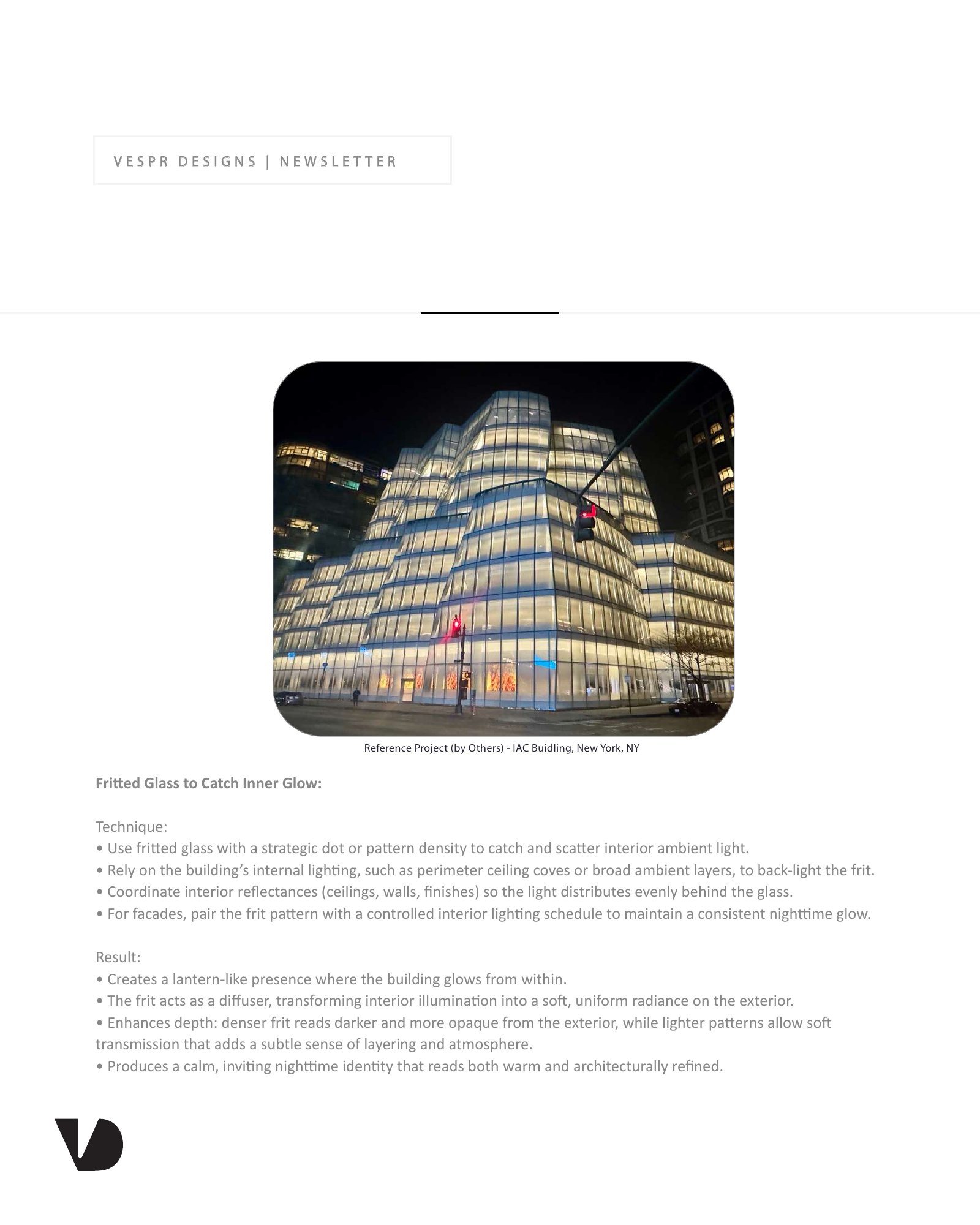
Fritted Glass to Catch Inner Glow
Reference project (by others): IAC Building, New York, NY.
Technique:
Use fritted glass with a strategic dot or pattern density to catch and scatter interior ambient light.
Rely on the building’s internal lighting, such as perimeter ceiling coves or broad ambient layers, to backlight the frit.
Coordinate interior reflectances (ceilings, walls, finishes) so the light distributes evenly behind the glass.
For facades, pair the frit pattern with a controlled interior lighting schedule to maintain a consistent nighttime glow.
Result:
Creates a lantern-like presence where the building glows from within.
The frit acts as a diffuser, transforming interior illumination into a soft, uniform radiance on the exterior.
Enhances depth: denser frit reads darker and more opaque from the exterior, while lighter patterns allow soft transmission that adds a subtle sense of layering and atmosphere.
Produces a calm, inviting nighttime identity that reads both warm and architecturally refined.
As you look ahead to new projects this season, these examples show how much potential a single glass surface can hold. Whether the goal is to celebrate texture, create a quiet inner glow, or shape a more expressive nighttime identity, the right technique can turn the facade into an active participant in the architecture. We hope the precedents in this issue spark fresh ideas, encourage experimentation, and add a bit of luminous inspiration to your work as the year draws to a close.
See the original newsletter (6 pages)