Design for Clarity: How to Avoid Veiling Reflections
Veiling reflection occurs when light from a bright source reflects off a glossy or semi-glossy surface, reducing contrast and making it difficult to see details clearly. This type of reflection can cause eye strain and visual discomfort, especially during tasks that require focus. To minimize veiling reflections, it’s important to carefully consider both the placement and type of light sources used in a space.
Task Surfaces
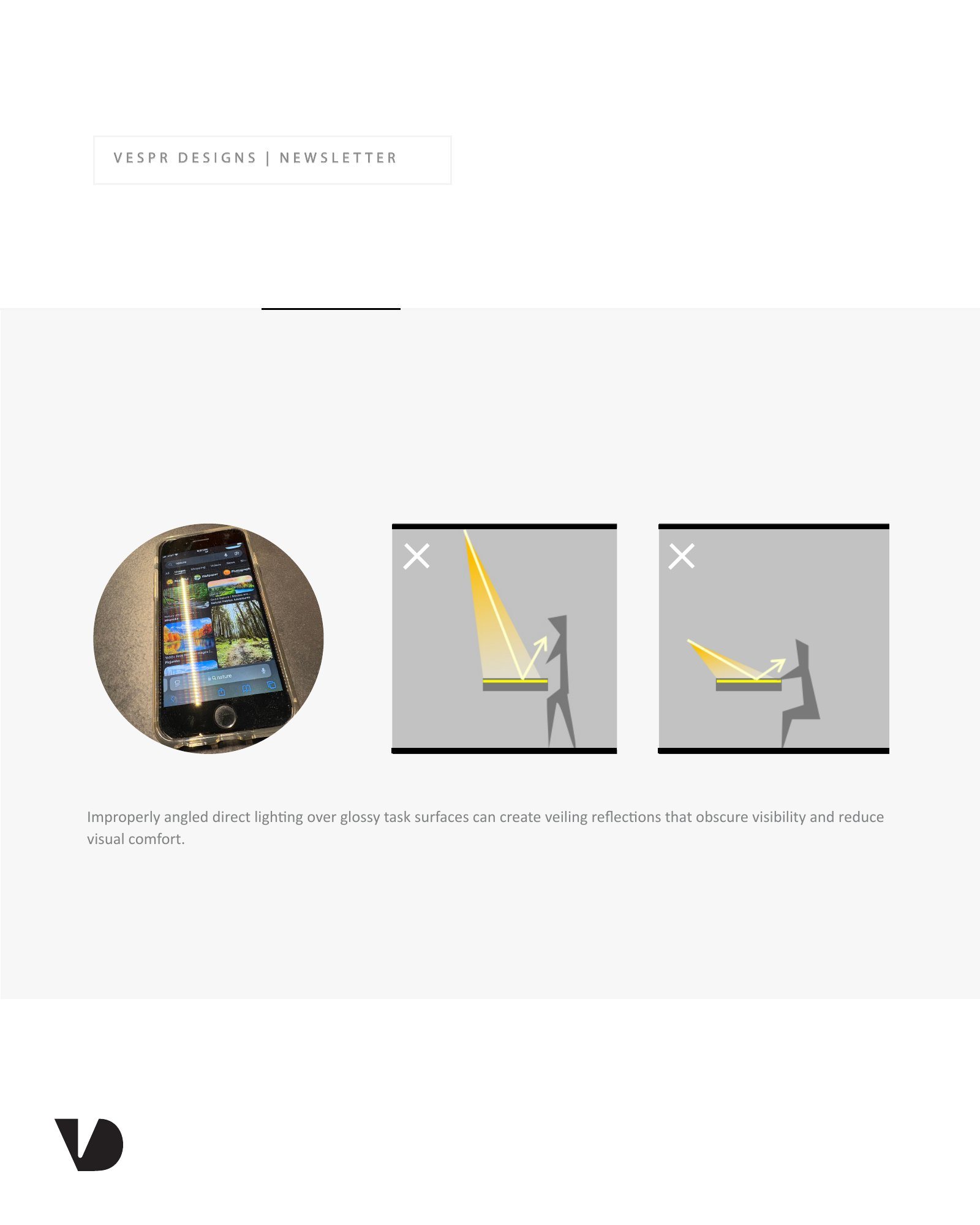
Improperly angled direct lighting over glossy task surfaces can create veiling reflections that obscure visibility and reduce visual comfort.
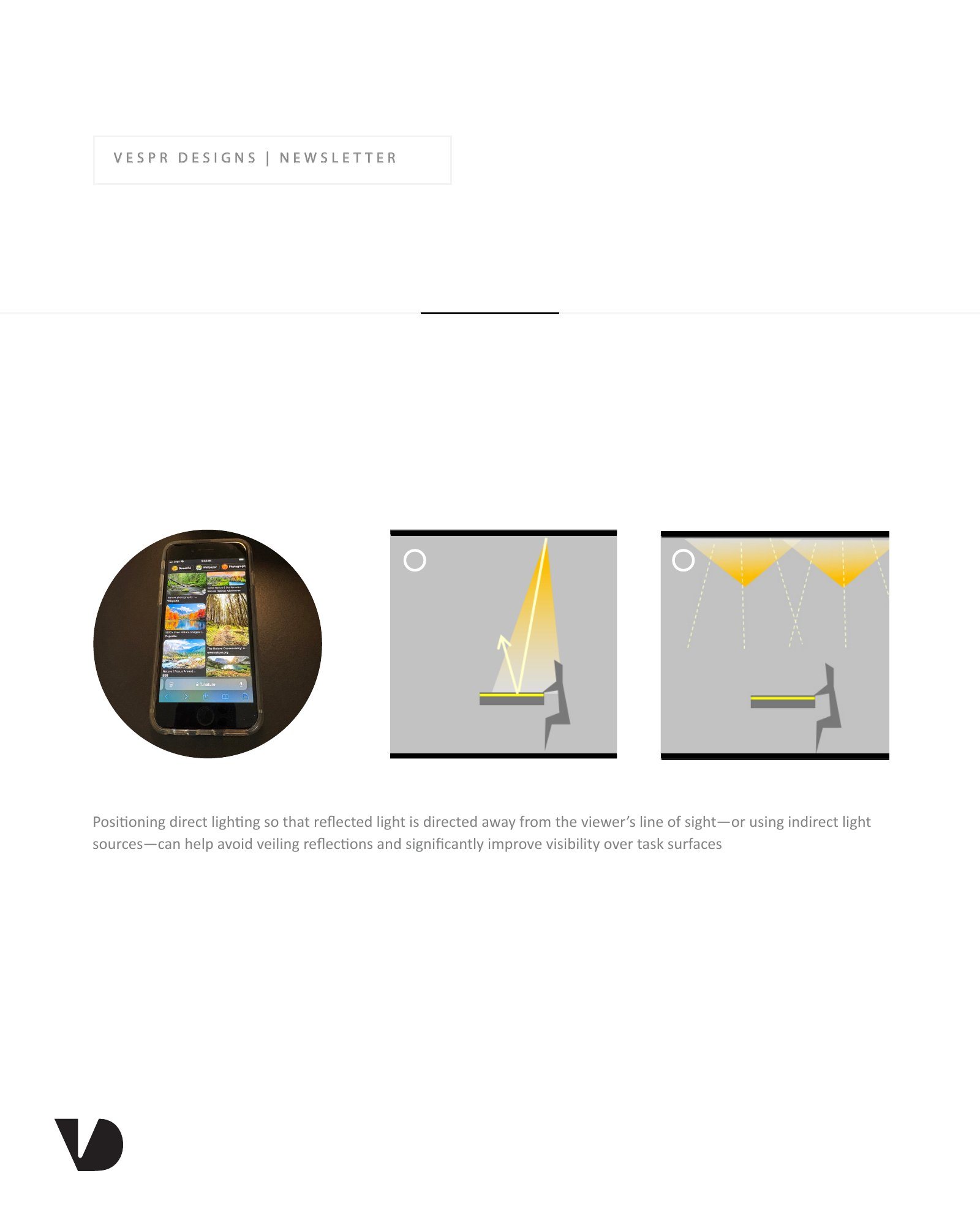
Positioning direct lighting so that reflected light is directed away from the viewer’s line of sight, or using indirect light sources, can help avoid veiling reflections and significantly improve visibility over task surfaces.
Offices and Computer Screens
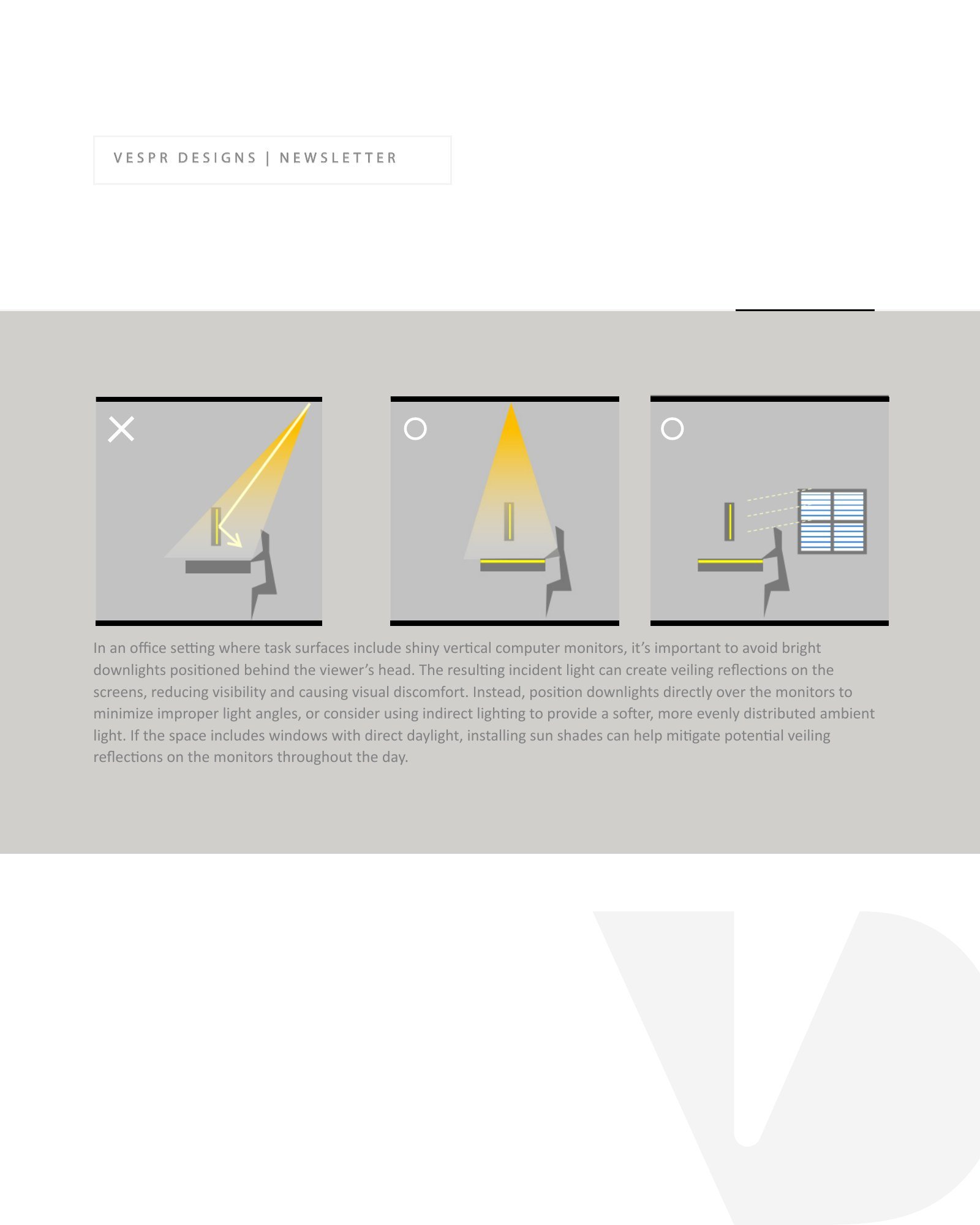
In an office setting where task surfaces include shiny vertical computer monitors, it’s important to avoid bright downlights positioned behind the viewer’s head. The resulting incident light can create veiling reflections on the screens, reducing visibility and causing visual discomfort. Instead, position downlights directly over the monitors to minimize improper light angles, or consider using indirect lighting to provide a softer, more evenly distributed ambient light. If the space includes windows with direct daylight, installing sun shades can help mitigate potential veiling reflections on the monitors throughout the day.
See the original newsletter (4 pages)