Choosing Between Warm Dimming and Tunable White: What You Need to Know
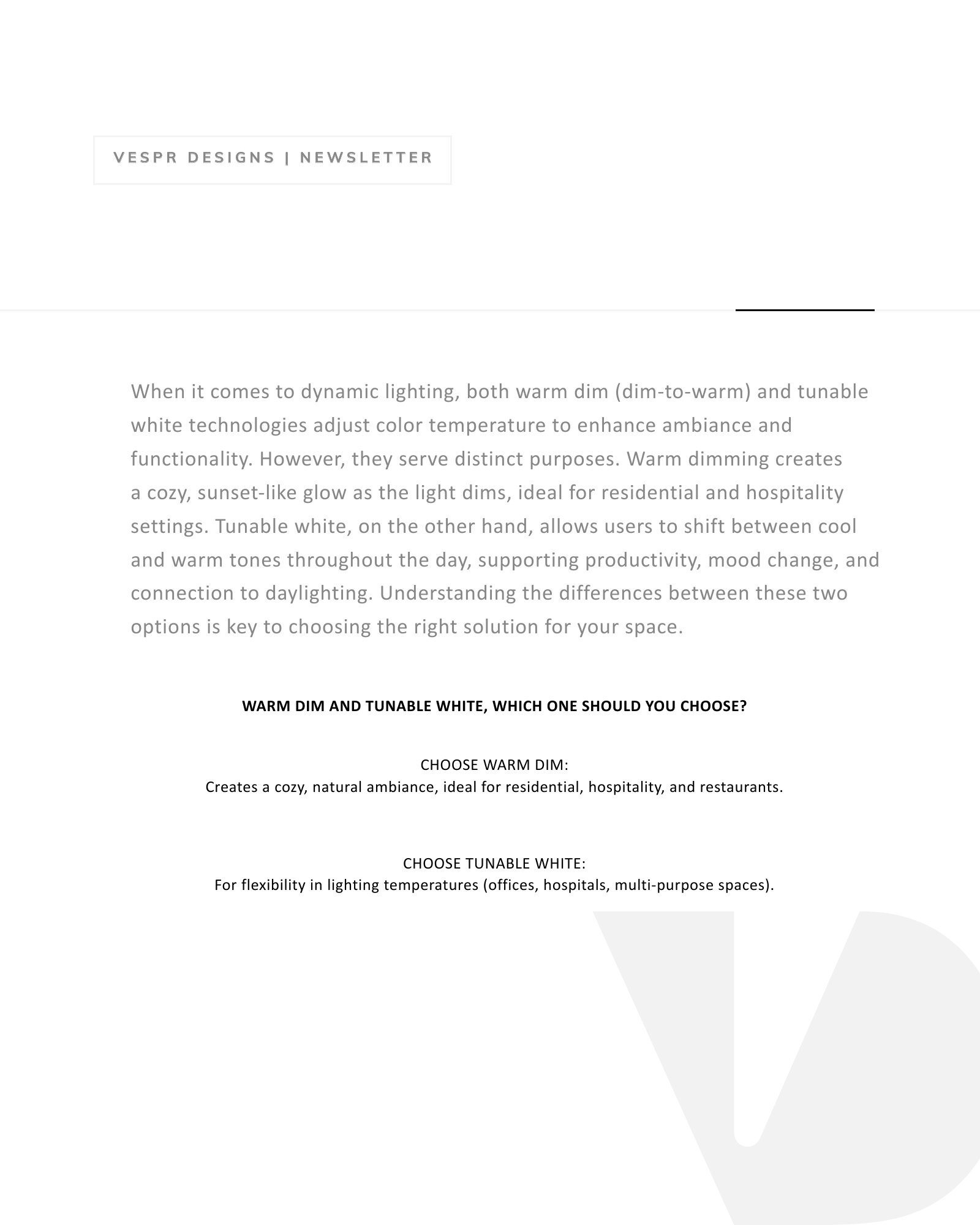
When it comes to dynamic lighting, both warm dim (dim-to-warm) and tunable white technologies adjust color temperature to enhance ambiance and functionality. However, they serve distinct purposes. Warm dimming creates a cozy, sunset-like glow as the light dims, ideal for residential and hospitality settings. Tunable white, on the other hand, allows users to shift between cool and warm tones throughout the day, supporting productivity, mood change, and connection to daylighting. Understanding the differences between these two options is key to choosing the right solution for your space.
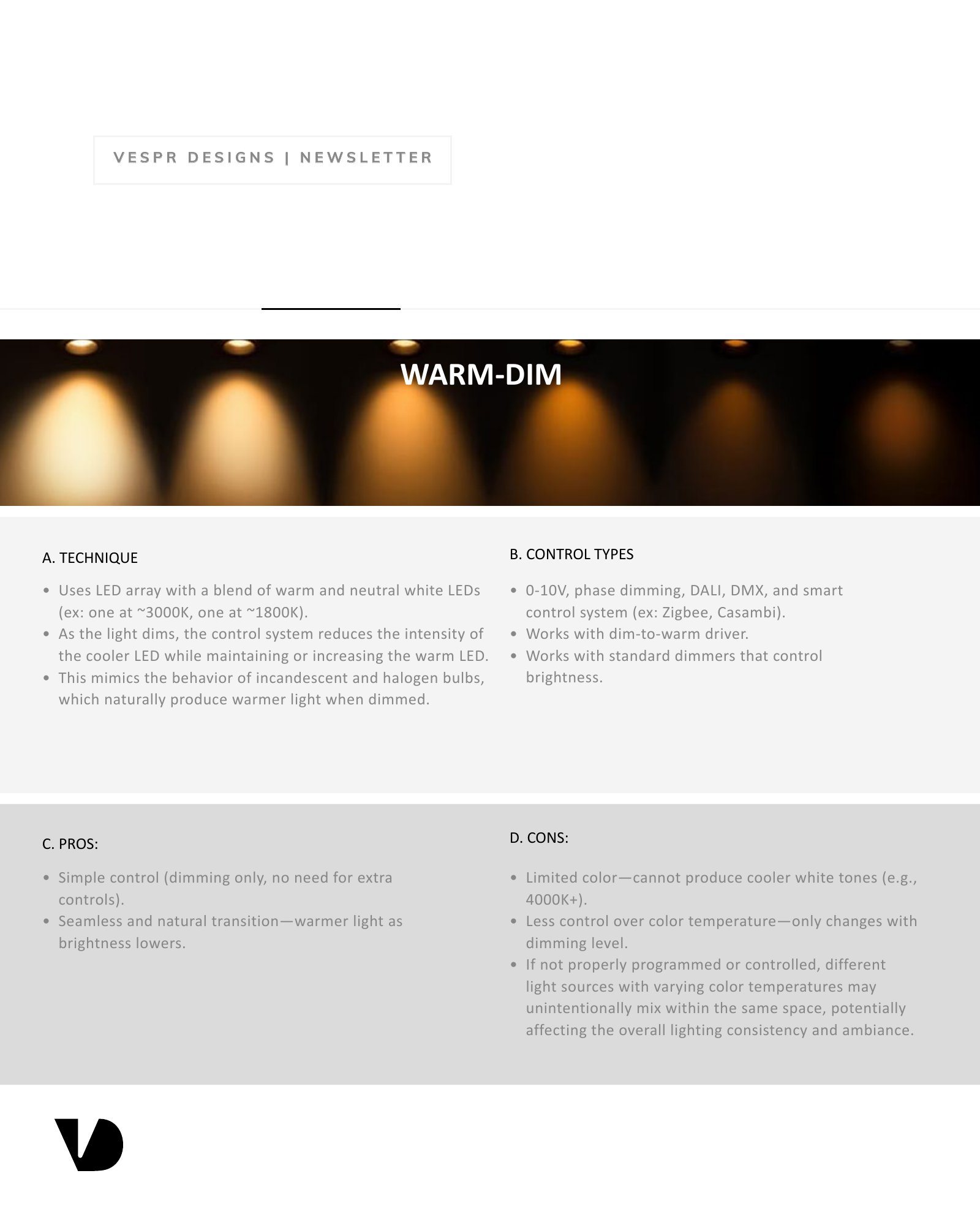
Warm Dim
Technique:
Uses an LED array with a blend of warm and neutral white LEDs (e.g., one at ~3000K, one at ~1800K).
As the light dims, the control system reduces the intensity of the cooler LED while maintaining or increasing the warm LED.
This mimics the behavior of incandescent and halogen bulbs, which naturally produce warmer light when dimmed.
Control types:
0, 10V, phase dimming, DALI, DMX, and smart control systems (e.g., Zigbee, Casambi).
Works with a dim-to-warm driver.
Works with standard dimmers that control brightness.
Pros:
Simple control (dimming only, no need for extra controls).
Seamless and natural transition, warmer light as brightness lowers.
Cons:
Limited color, cannot produce cooler white tones (e.g., 4000K+).
Less control over color temperature, it only changes with dimming level.
If not properly programmed or controlled, different light sources with varying color temperatures may unintentionally mix within the same space, potentially affecting the overall lighting consistency and ambiance.
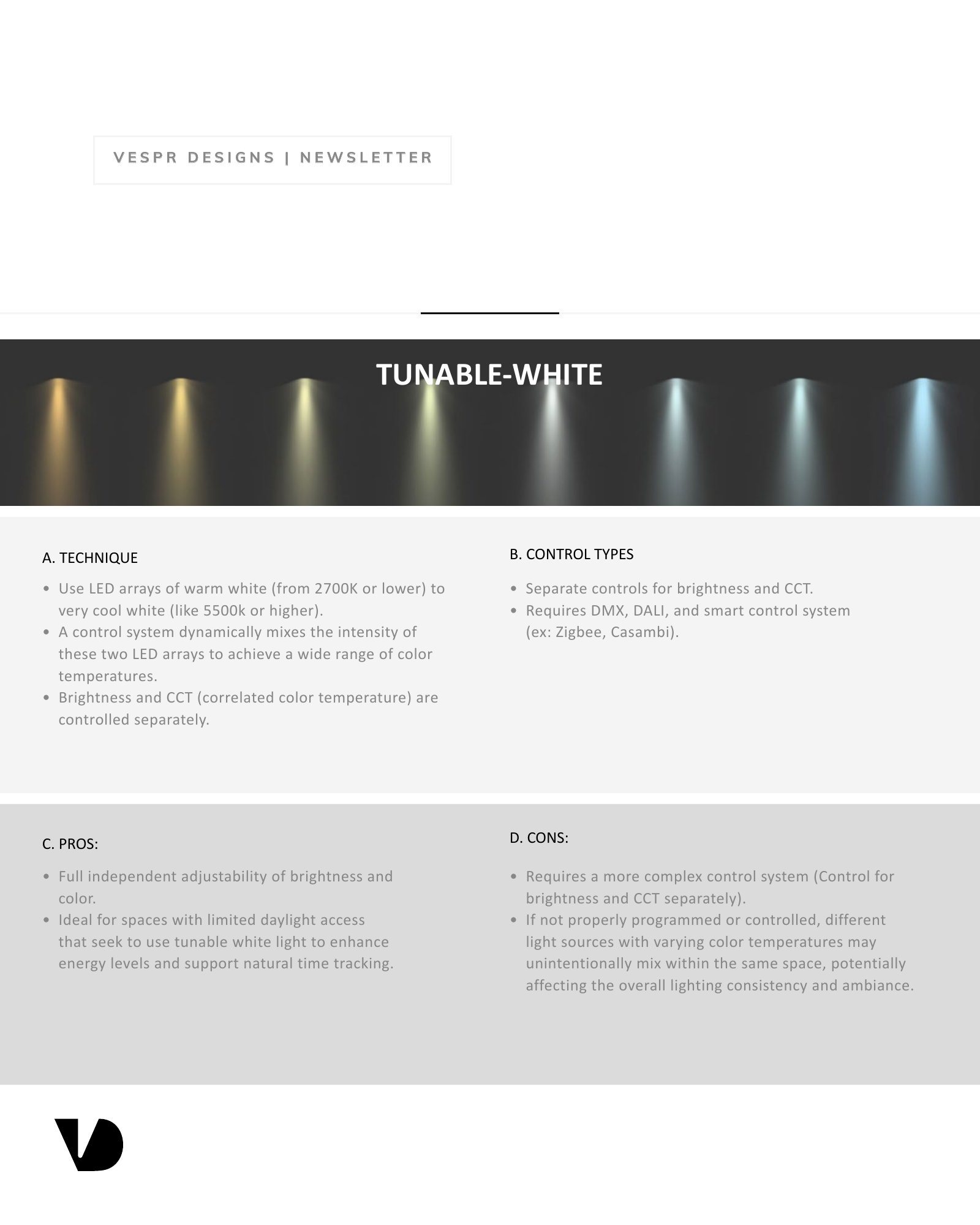
Tunable White
Technique:
Uses LED arrays of warm white (from 2700K or lower) to very cool white (like 5500K or higher).
A control system dynamically mixes the intensity of these two LED arrays to achieve a wide range of color temperatures.
Brightness and CCT (correlated color temperature) are controlled separately.
Control types:
Separate controls for brightness and CCT.
Requires DMX, DALI, or a smart control system (e.g., Zigbee, Casambi).
Pros:
Full independent adjustability of brightness and color.
Ideal for spaces with limited daylight access that seek to use tunable white light to enhance energy levels and support natural time tracking.
Cons:
Requires a more complex control system (brightness and CCT are controlled separately).
If not properly programmed or controlled, different light sources with varying color temperatures may unintentionally mix within the same space, potentially affecting the overall lighting consistency and ambiance.
Warm Dim or Tunable White: Which One Should You Choose?
Choose warm dim: creates a cozy, natural ambiance, ideal for residential, hospitality, and restaurants.
Choose tunable white: for flexibility in lighting temperatures (offices, hospitals, multi-purpose spaces).
See the original newsletter (4 pages)