Mastering Color Consistency: The Role of MacAdam Ellipses in Lighting Design
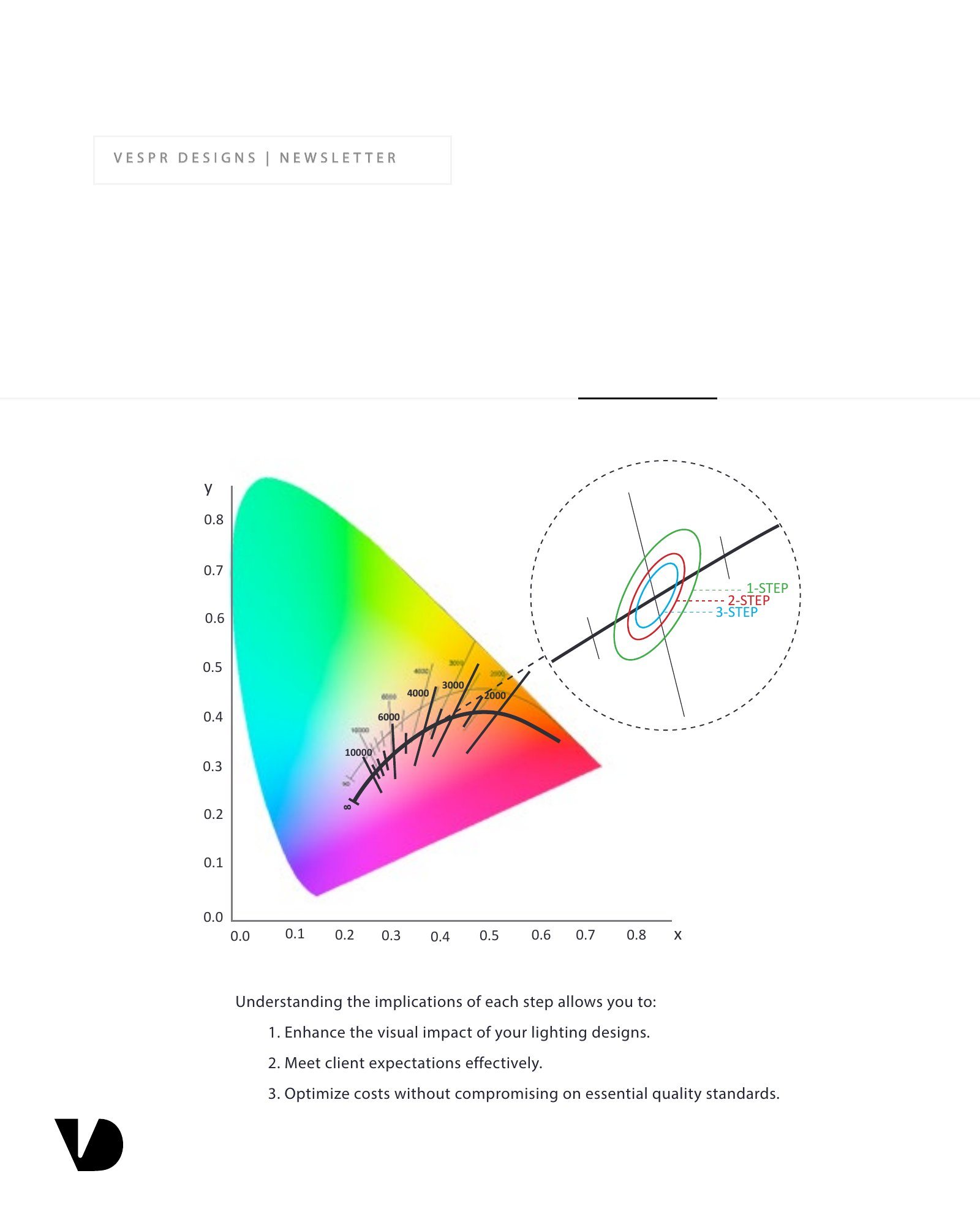
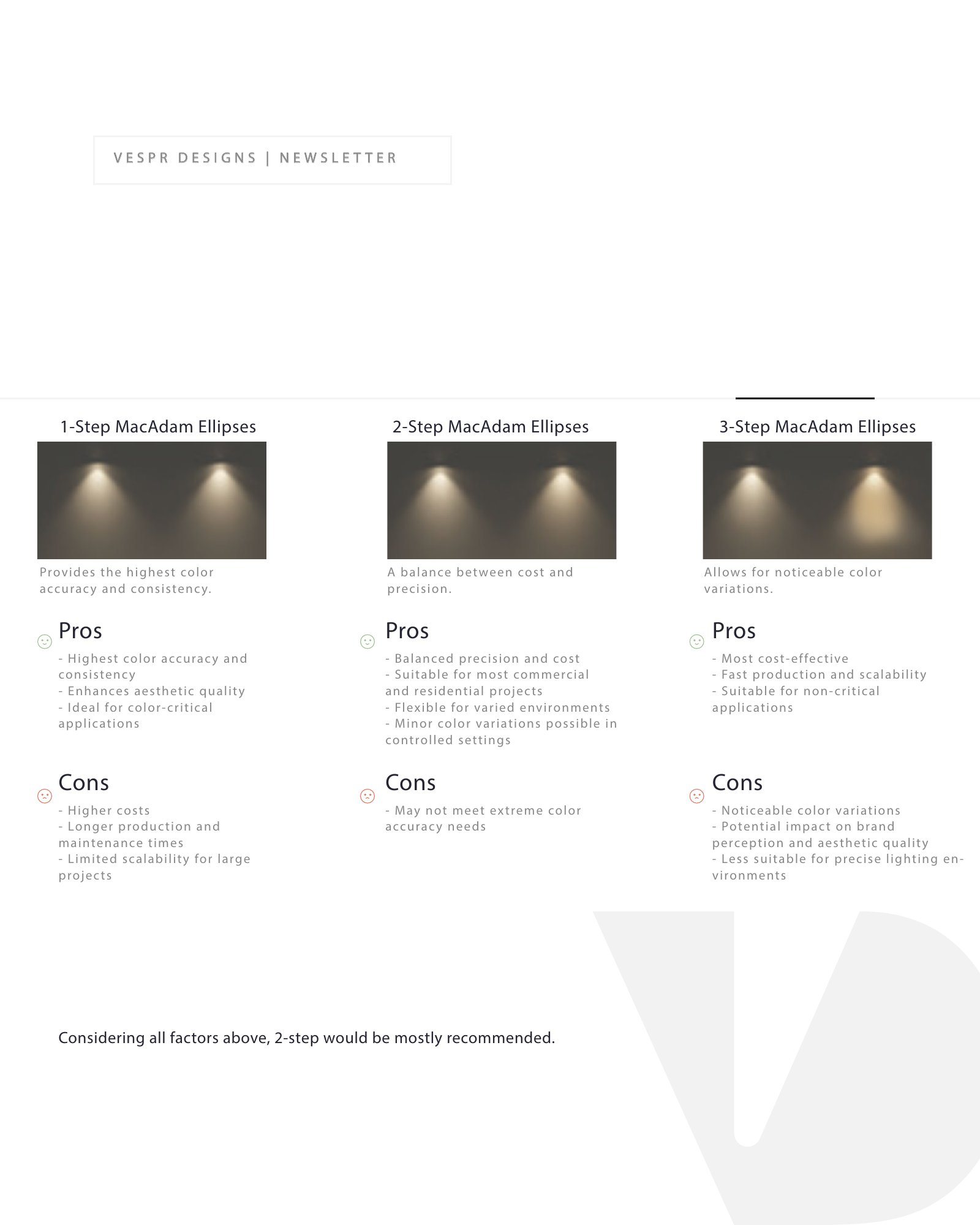
When discussing 1-step, 2-step, or 3-step MacAdam Ellipses, it typically relates to different levels of color precision or tolerance applied during color matching and manufacturing processes. The MacAdam Ellipse is a crucial concept in lighting design that helps professionals understand color perception. It illustrates the range of similar colors surrounding a specific point on a color chart, with ellipses categorized into different “steps” based on the degree of distinguishability: 1-step ellipses indicate colors that are nearly indistinguishable, while 2-step and 3-step ellipses represent larger ranges of color variations that still appear similar to the average observer.
In lighting design, awareness of these distinctions allows designers to select fixtures and materials that create visually harmonious environments, ensuring that the intended ambiance is achieved while minimizing perceptible color differences under various lighting conditions. This is particularly important in applications where multiple white light fixtures are installed side by side. Fixtures sourced from smaller MacAdam Ellipse steps will exhibit greater consistency in color temperature, ensuring a more uniform appearance.
1-Step MacAdam Ellipses
Provides the highest color accuracy and consistency.
Pros: highest color accuracy and consistency; enhances aesthetic quality; ideal for color-critical applications.
Cons: higher costs; longer production and maintenance times; limited scalability for large projects.
2-Step MacAdam Ellipses
A balance between cost and precision.
Pros: balanced precision and cost; suitable for most commercial and residential projects; flexible for varied environments; minor color variations possible in controlled settings.
Cons: may not meet extreme color accuracy needs.
3-Step MacAdam Ellipses
Allows for noticeable color variations.
Pros: most cost-effective; fast production and scalability; suitable for non-critical applications.
Cons: noticeable color variations; potential impact on brand perception and aesthetic quality; less suitable for precise lighting environments.
Considering all factors above, 2-step would be mostly recommended.
In Summary
Understanding the implications of each step allows you to:
Enhance the visual impact of your lighting designs.
Meet client expectations effectively.
Optimize costs without compromising on essential quality standards.
See the original newsletter (5 pages)