Seeing the Light: Why Glare Control Matters
In lighting design, brightness alone does not define visual comfort. One of the most critical, and often overlooked, elements of a successful lighting environment is glare control.
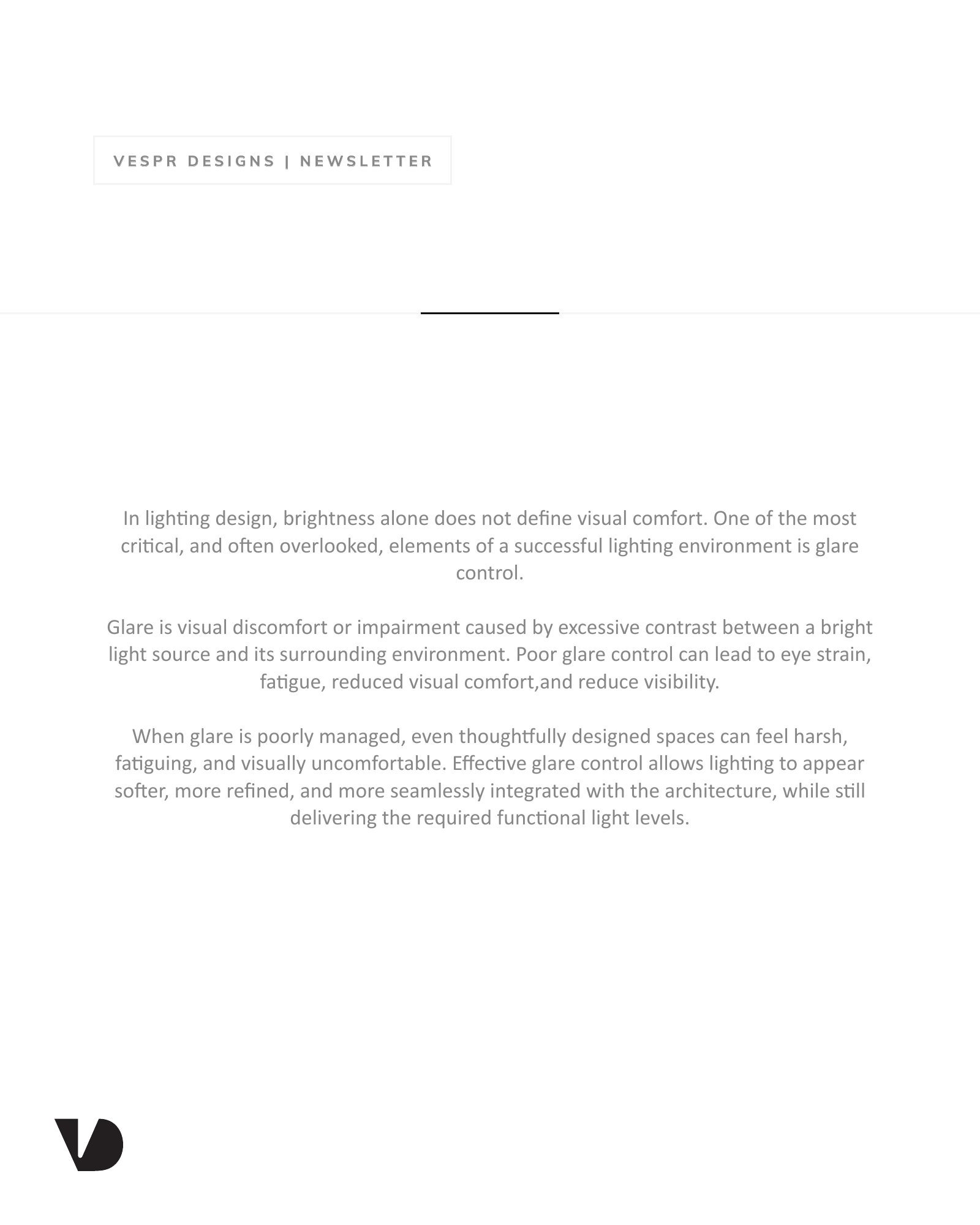
Glare is visual discomfort or impairment caused by excessive contrast between a bright light source and its surrounding environment. Poor glare control can lead to eye strain, fatigue, reduced visual comfort, and reduced visibility.
When glare is poorly managed, even thoughtfully designed spaces can feel harsh, fatiguing, and visually uncomfortable. Effective glare control allows lighting to appear softer, more refined, and more seamlessly integrated with the architecture, while still delivering the required functional light levels.
Common Causes of Glare
Exposed downlights visible from seated positions
Decorative fixtures with unshielded lamps
Overly bright linear lighting
Reflections on glossy materials
Exterior lighting shining directly into the eye
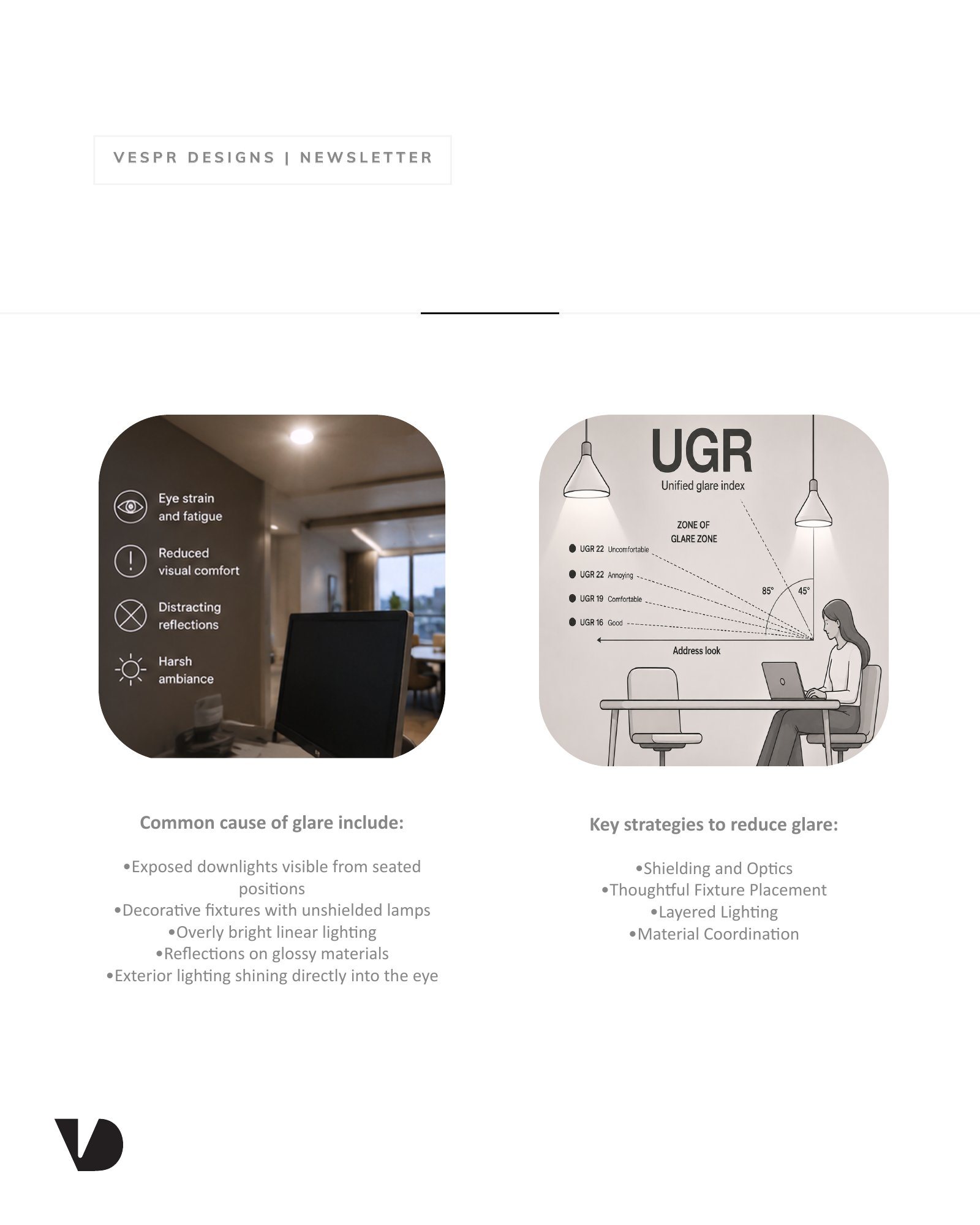
Key Strategies to Reduce Glare
Shielding and optics
Thoughtful fixture placement
Layered lighting
Material coordination
Shielding and Optics
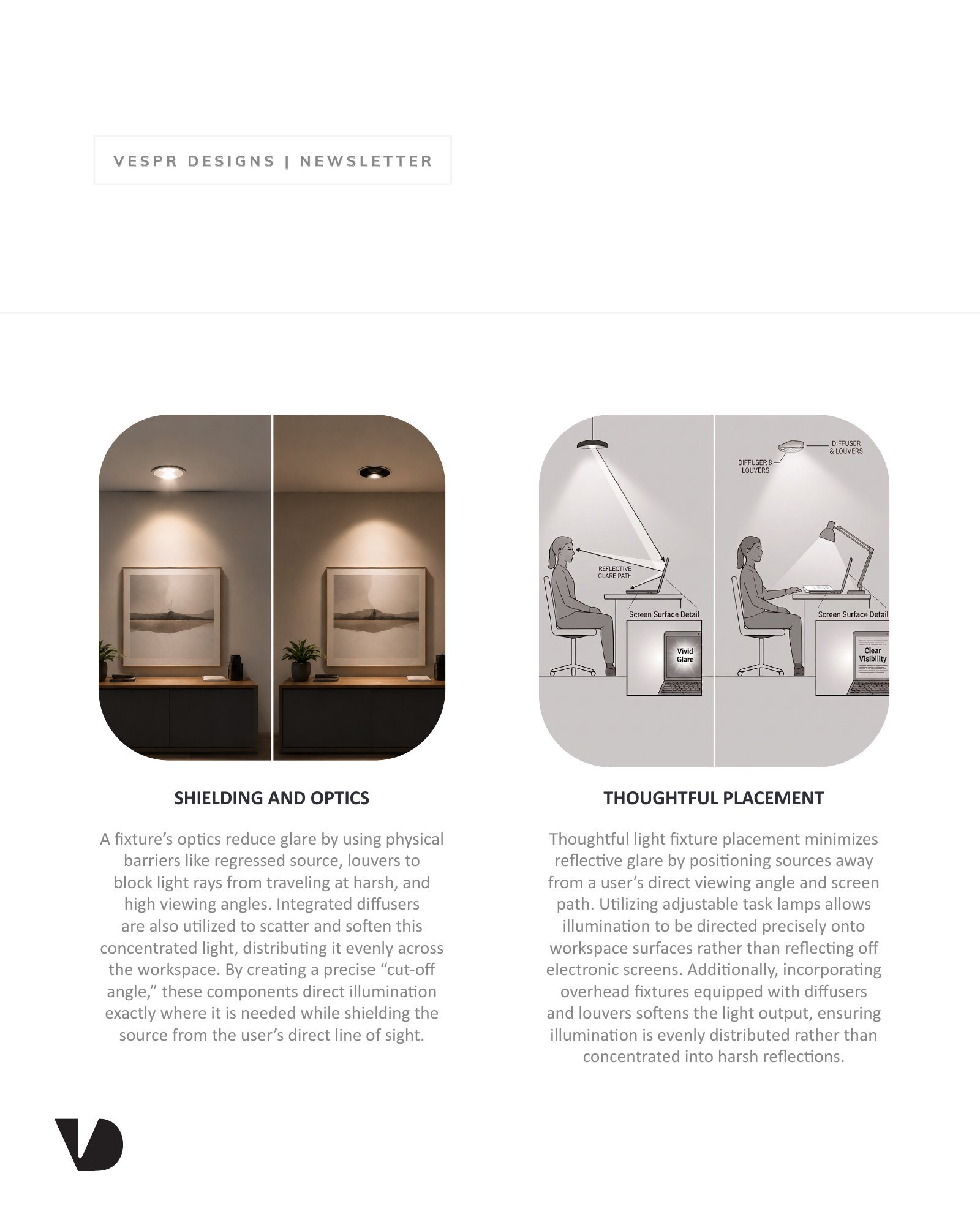
A fixture’s optics reduce glare by using physical barriers like a regressed source or louvers to block light rays from traveling at harsh, high viewing angles. Integrated diffusers are also utilized to scatter and soften this concentrated light, distributing it evenly across the workspace. By creating a precise “cut-off angle,” these components direct illumination exactly where it is needed while shielding the source from the user’s direct line of sight.
Thoughtful Placement
Thoughtful light fixture placement minimizes reflective glare by positioning sources away from a user’s direct viewing angle and screen path. Utilizing adjustable task lamps allows illumination to be directed precisely onto workspace surfaces rather than reflecting off electronic screens. Additionally, incorporating overhead fixtures equipped with diffusers and louvers softens the light output, ensuring illumination is evenly distributed rather than concentrated into harsh reflections.
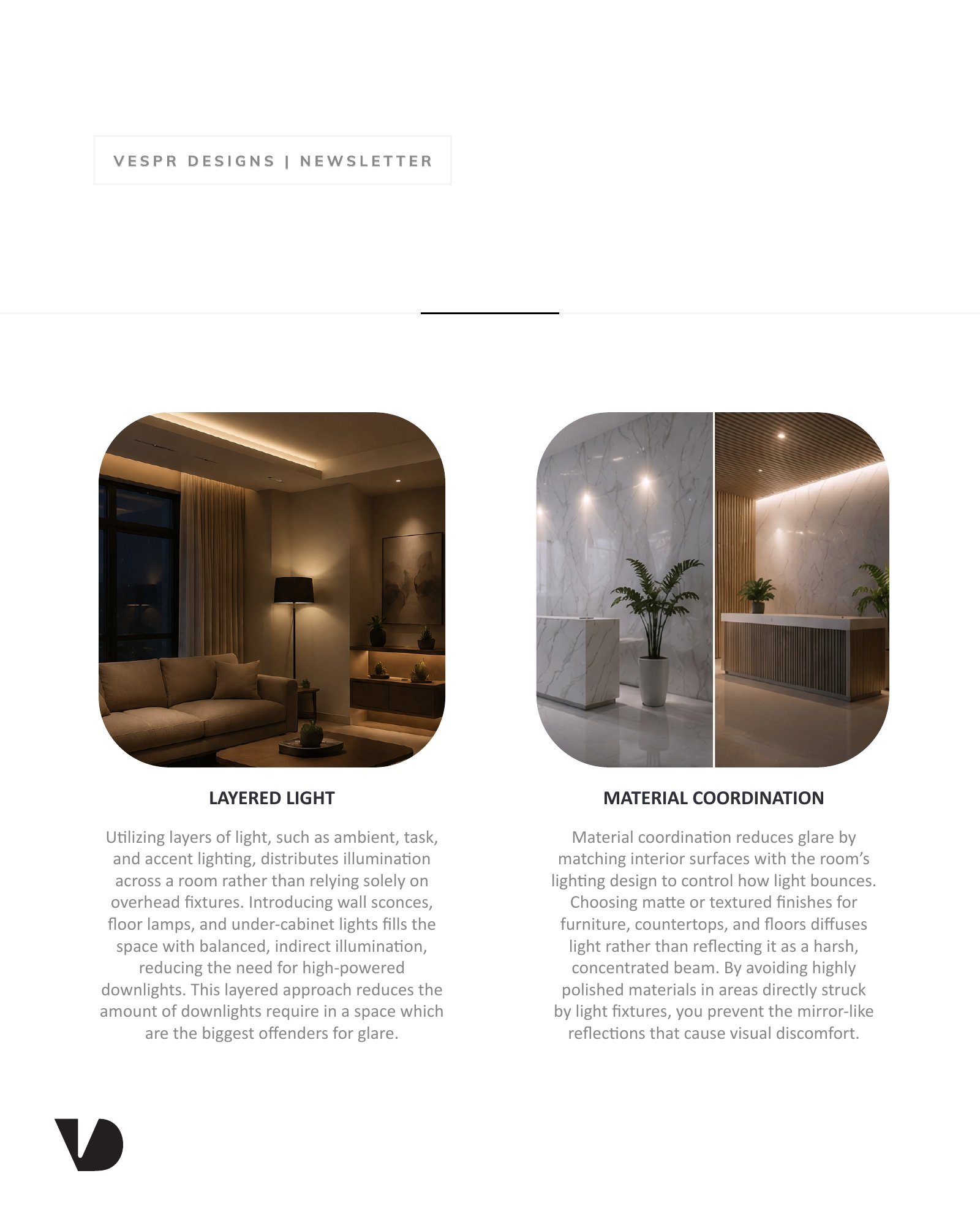
Layered Light
Utilizing layers of light, such as ambient, task, and accent lighting, distributes illumination across a room rather than relying solely on overhead fixtures. Introducing wall sconces, floor lamps, and under-cabinet lights fills the space with balanced, indirect illumination, reducing the need for high-powered downlights. This layered approach reduces the number of downlights required in a space, which are the biggest offenders for glare.
Material Coordination
Material coordination reduces glare by matching interior surfaces with the room’s lighting design to control how light bounces. Choosing matte or textured finishes for furniture, countertops, and floors diffuses light rather than reflecting it as a harsh, concentrated beam. By avoiding highly polished materials in areas directly struck by light fixtures, you prevent the mirror-like reflections that cause visual discomfort.
The best lighting is not only seen, it is felt. Thoughtful glare control enhances architecture, improves comfort, and elevates the overall experience of a space without drawing attention to the fixtures themselves.
See the original newsletter (6 pages)