Shelf Lighting Design: A Guide to Horizontal and Vertical Illumination Strategies
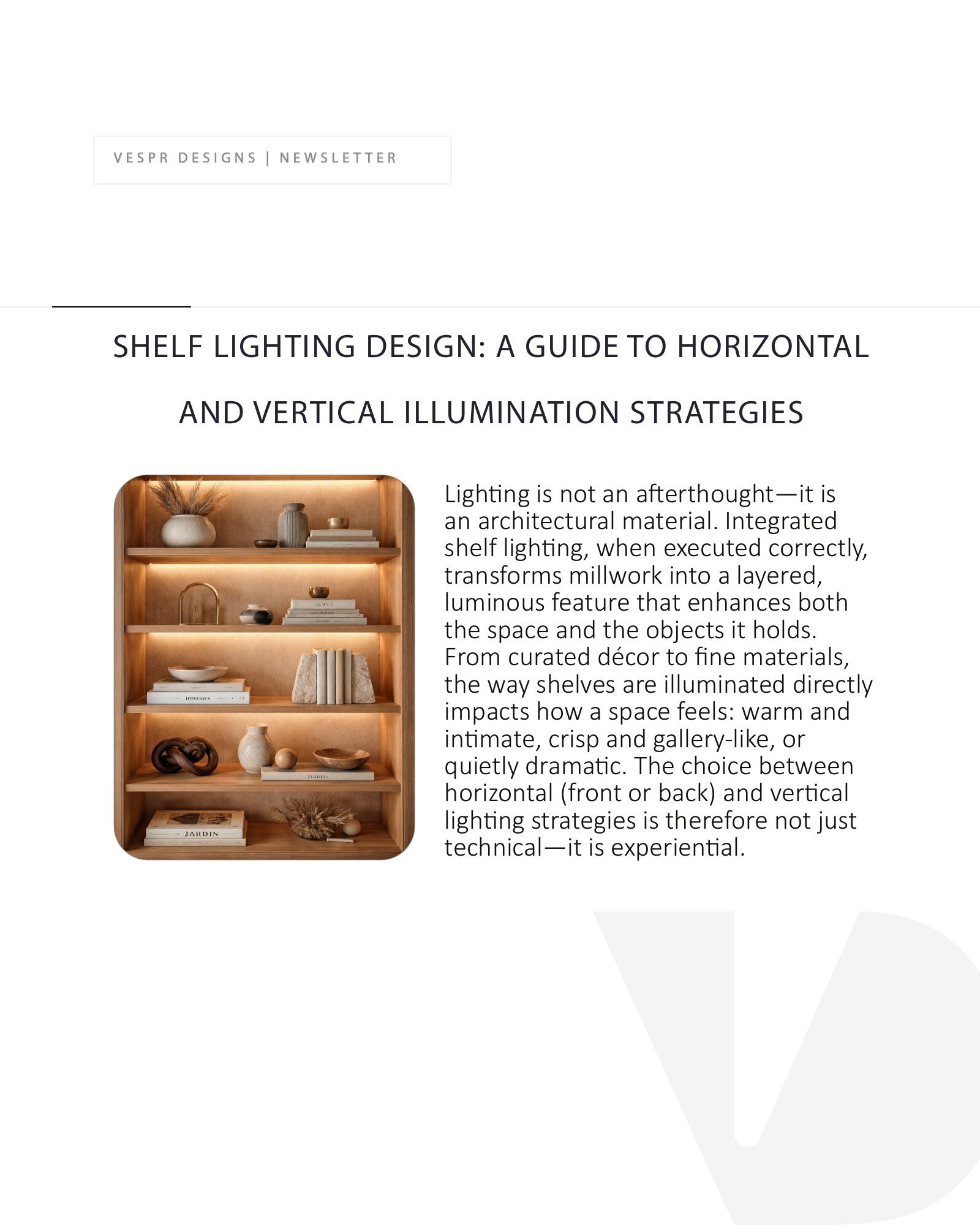
Lighting is not an afterthought, it is an architectural material. Integrated shelf lighting, when executed correctly, transforms millwork into a layered, luminous feature that enhances both the space and the objects it holds. From curated décor to fine materials, the way shelves are illuminated directly impacts how a space feels: warm and intimate, crisp and gallery-like, or quietly dramatic. The choice between horizontal (front or back) and vertical lighting strategies is therefore not just technical, it is experiential.
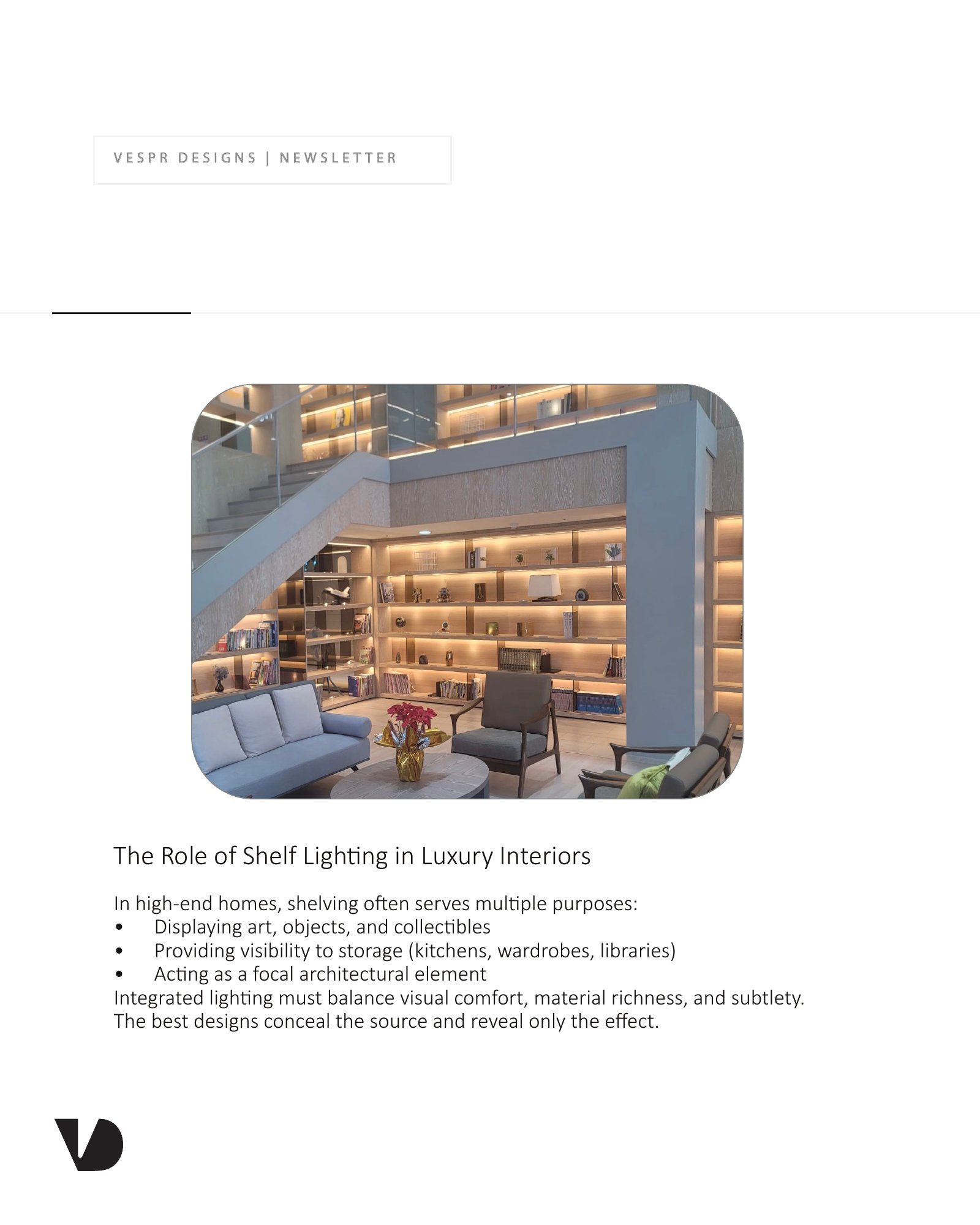
The Role of Shelf Lighting in Luxury Interiors
In high-end homes, shelving often serves multiple purposes:
Displaying art, objects, and collectibles
Providing visibility to storage (kitchens, wardrobes, libraries)
Acting as a focal architectural element
Integrated lighting must balance visual comfort, material richness, and subtlety. The best designs conceal the source and reveal only the effect.
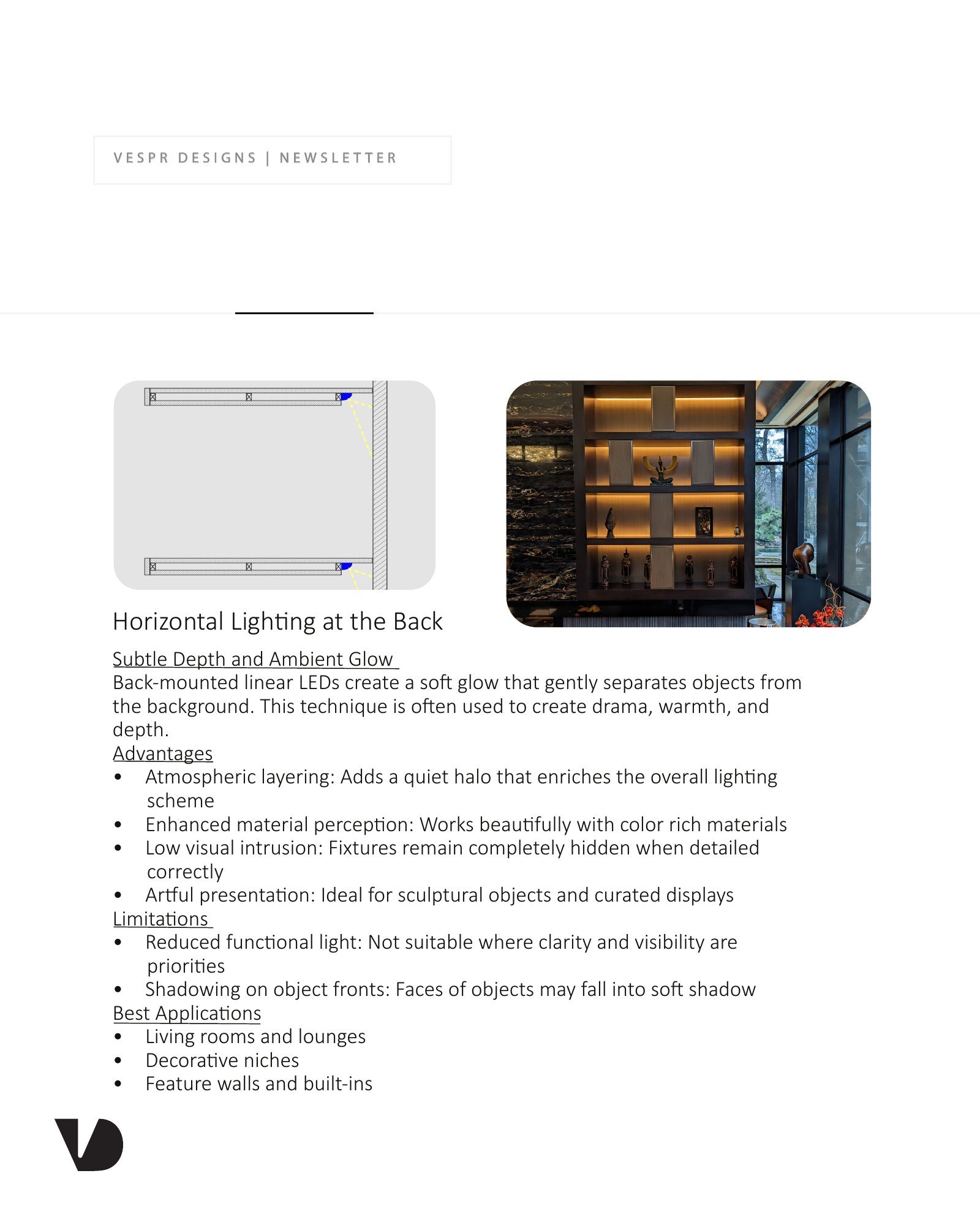
Horizontal Lighting at the Back: Subtle Depth and Ambient Glow
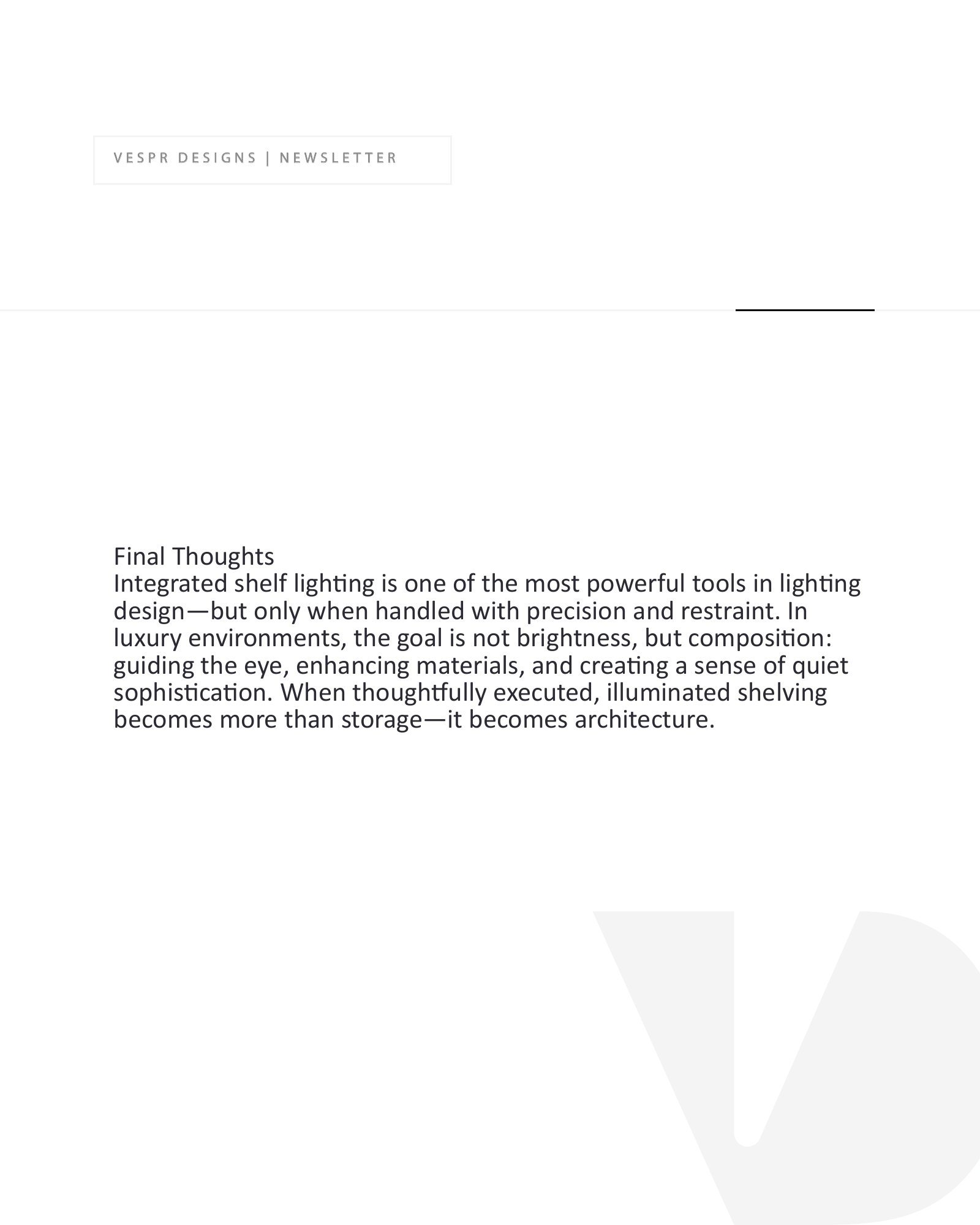
Back-mounted linear LEDs create a soft glow that gently separates objects from the background. This technique is often used to create drama, warmth, and depth.
Advantages:
Atmospheric layering: Adds a quiet halo that enriches the overall lighting scheme
Enhanced material perception: Works beautifully with color-rich materials
Low visual intrusion: Fixtures remain completely hidden when detailed correctly
Artful presentation: Ideal for sculptural objects and curated displays
Limitations:
Reduced functional light: Not suitable where clarity and visibility are priorities
Shadowing on object fronts: Faces of objects may fall into soft shadow
Best applications: living rooms and lounges, decorative niches, feature walls and built-ins.
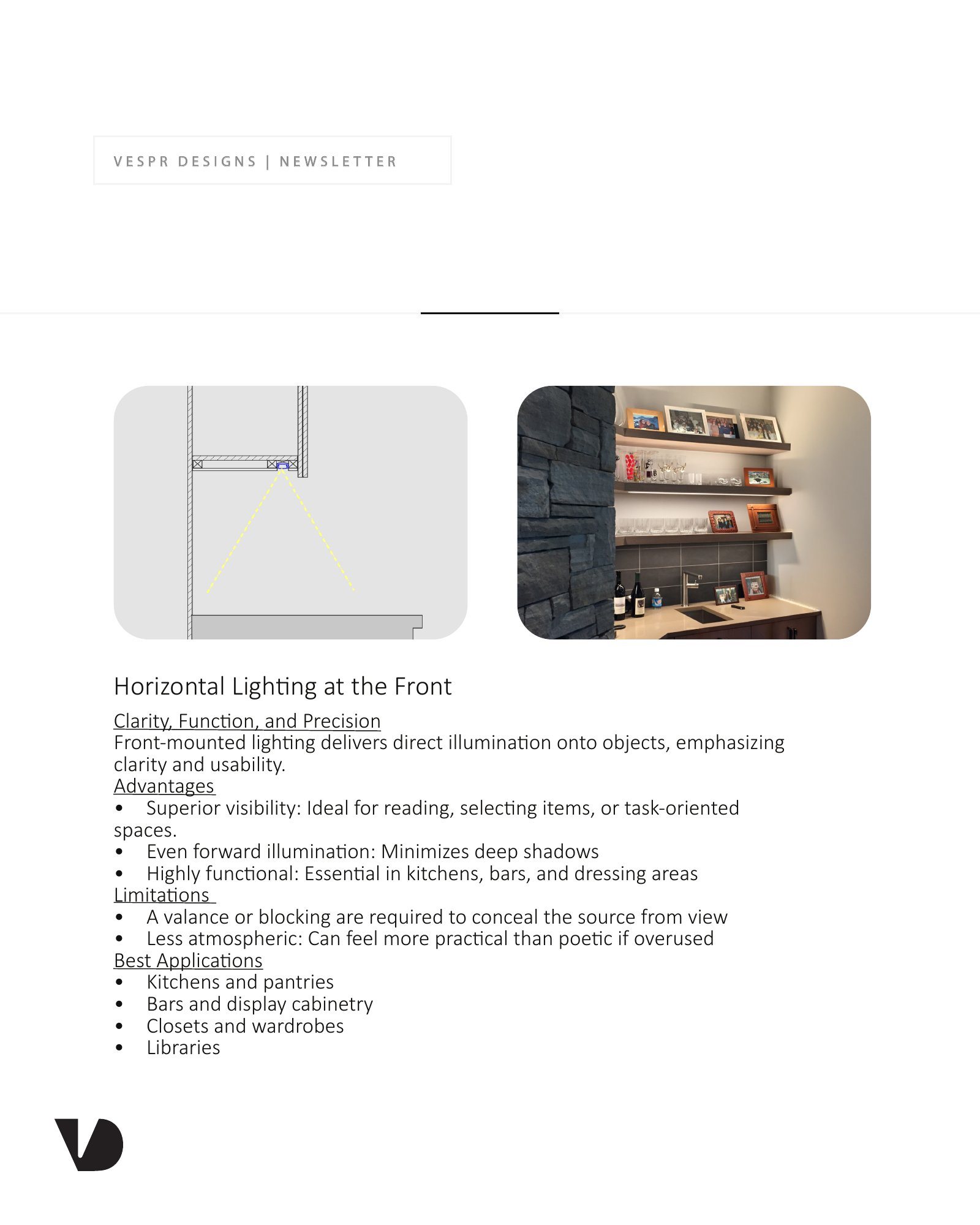
Horizontal Lighting at the Front: Clarity, Function, and Precision
Front-mounted lighting delivers direct illumination onto objects, emphasizing clarity and usability.
Advantages:
Superior visibility: Ideal for reading, selecting items, or task-oriented spaces
Even forward illumination: Minimizes deep shadows
Highly functional: Essential in kitchens, bars, and dressing areas
Limitations:
A valance or blocking is required to conceal the source from view
Less atmospheric: Can feel more practical than poetic if overused
Best applications: kitchens and pantries, bars and display cabinetry, closets and wardrobes, libraries.
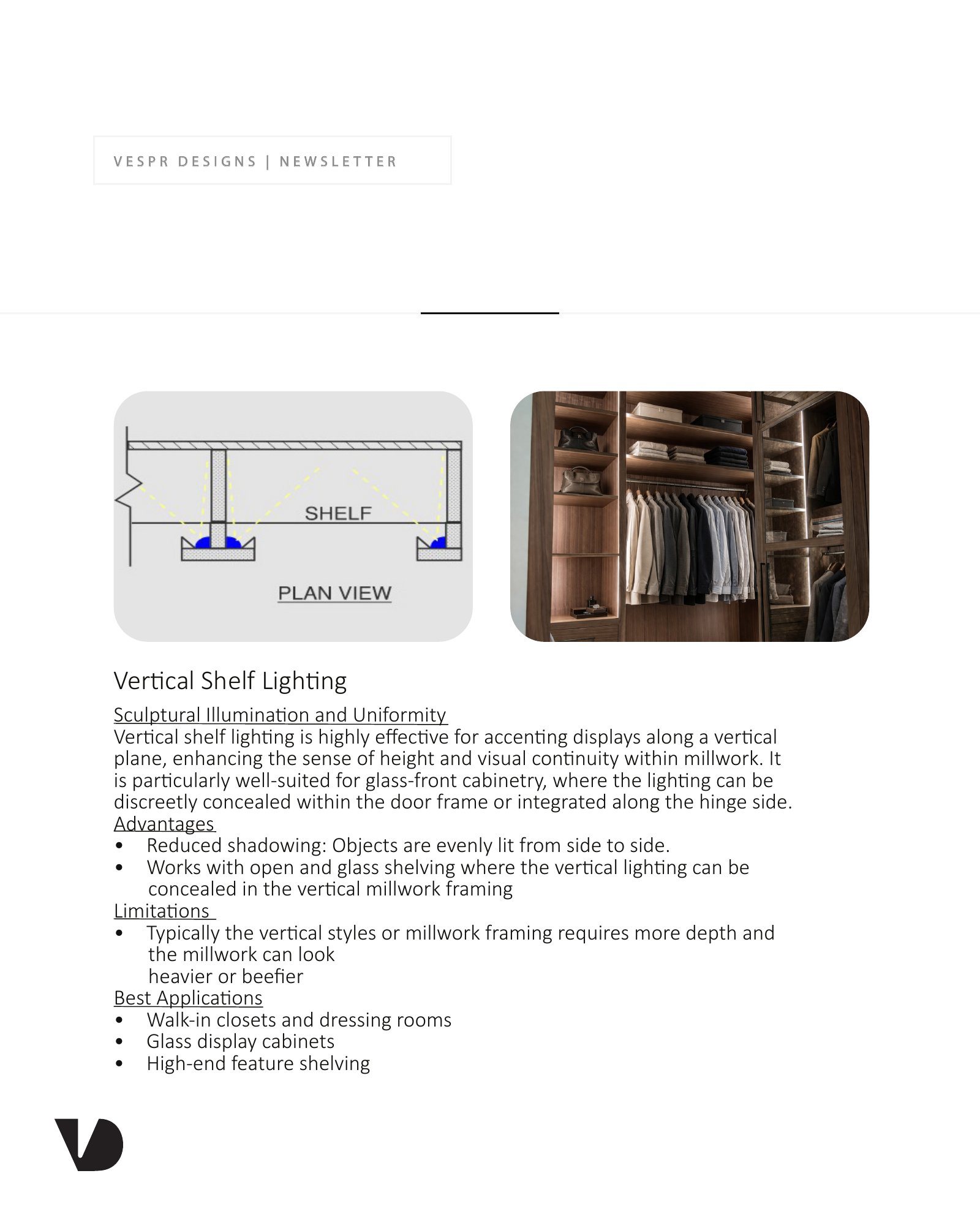
Vertical Shelf Lighting: Sculptural Illumination and Uniformity
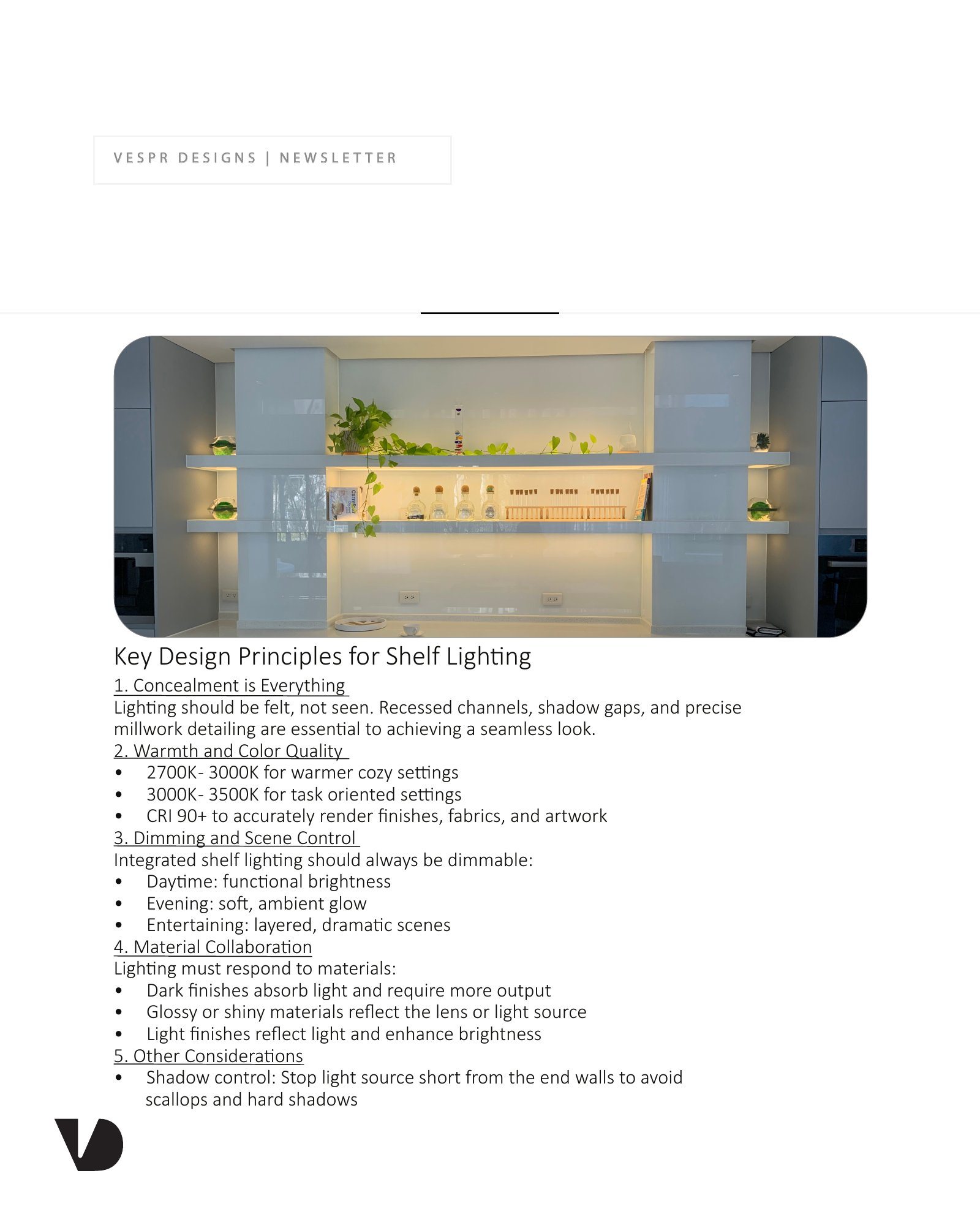
Vertical shelf lighting is highly effective for accenting displays along a vertical plane, enhancing the sense of height and visual continuity within millwork. It is particularly well-suited for glass-front cabinetry, where the lighting can be discreetly concealed within the door frame or integrated along the hinge side.
Advantages:
Reduced shadowing: Objects are evenly lit from side to side
Works with open and glass shelving, where the vertical lighting can be concealed in the vertical millwork framing
Limitations:
Typically the vertical styles or millwork framing require more depth, and the millwork can look heavier or beefier
Best applications: walk-in closets and dressing rooms, glass display cabinets, high-end feature shelving.
Key Design Principles for Shelf Lighting
1. Concealment is everything. Lighting should be felt, not seen. Recessed channels, shadow gaps, and precise millwork detailing are essential to achieving a seamless look.
2. Warmth and color quality. 2700K, 3000K for warmer, cozy settings; 3000K, 3500K for task-oriented settings; CRI 90+ to accurately render finishes, fabrics, and artwork.
3. Dimming and scene control. Integrated shelf lighting should always be dimmable: functional brightness in the daytime, a soft ambient glow in the evening, and layered, dramatic scenes for entertaining.
4. Material collaboration. Lighting must respond to materials: dark finishes absorb light and require more output; glossy or shiny materials reflect the lens or light source; light finishes reflect light and enhance brightness.
5. Other considerations. Shadow control: stop the light source short of the end walls to avoid scallops and hard shadows.
Final Thoughts
Integrated shelf lighting is one of the most powerful tools in lighting design, but only when handled with precision and restraint. In luxury environments, the goal is not brightness, but composition: guiding the eye, enhancing materials, and creating a sense of quiet sophistication. When thoughtfully executed, illuminated shelving becomes more than storage, it becomes architecture.
See the original newsletter (7 pages)