Lighting for Wayfinding
In successful spaces, people don’t stop to think about how they find their way, they simply move with confidence. Thoughtful lighting plays a powerful yet often invisible role in wayfinding, shaping how users understand, navigate, and feel within an environment.
While signs and graphics provide information, lighting provides intuition. Our eyes naturally move toward brightness, contrast, and rhythm. By intentionally using light to highlight decision points, paths, and destinations, designers can reduce confusion and create a seamless user experience.
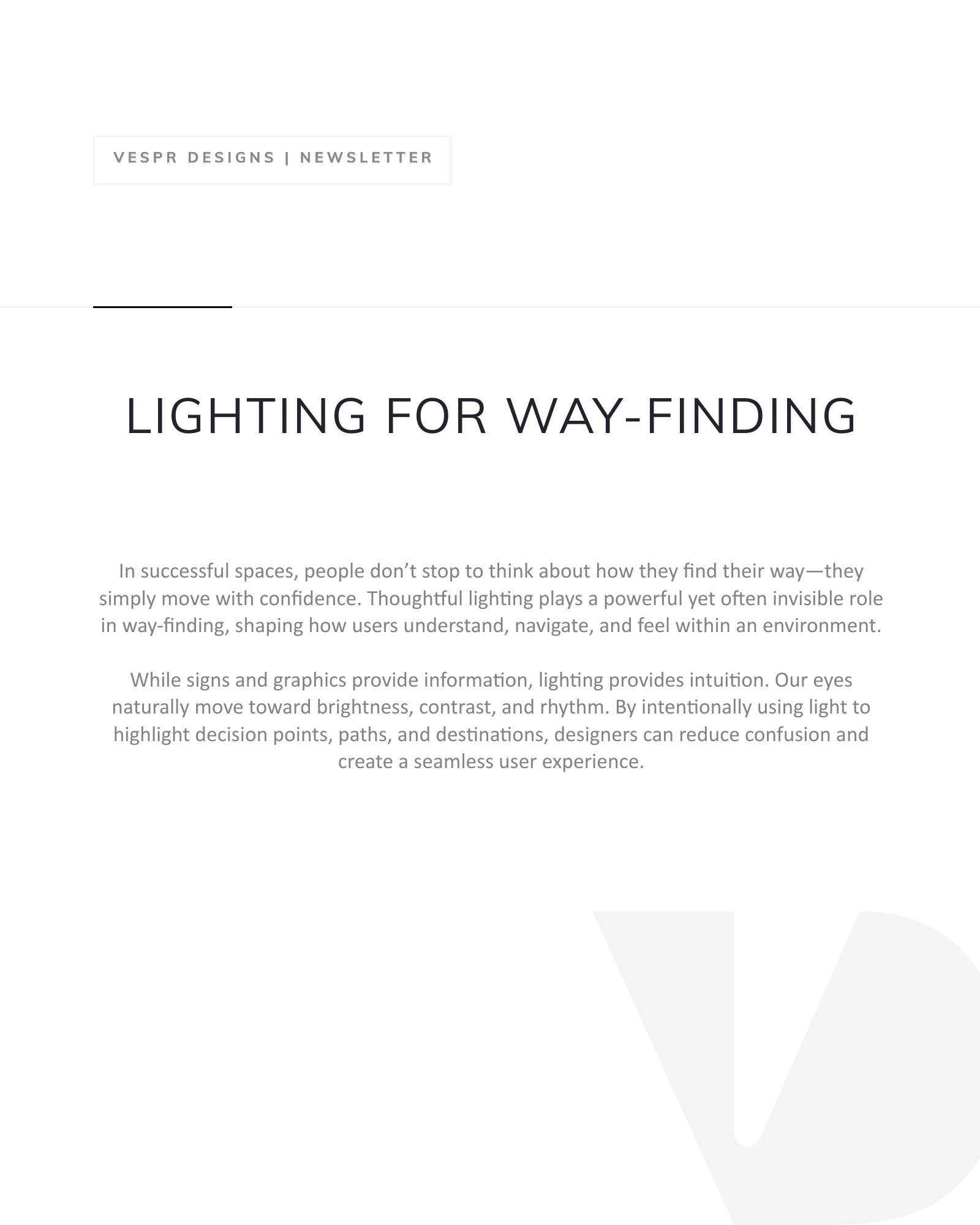
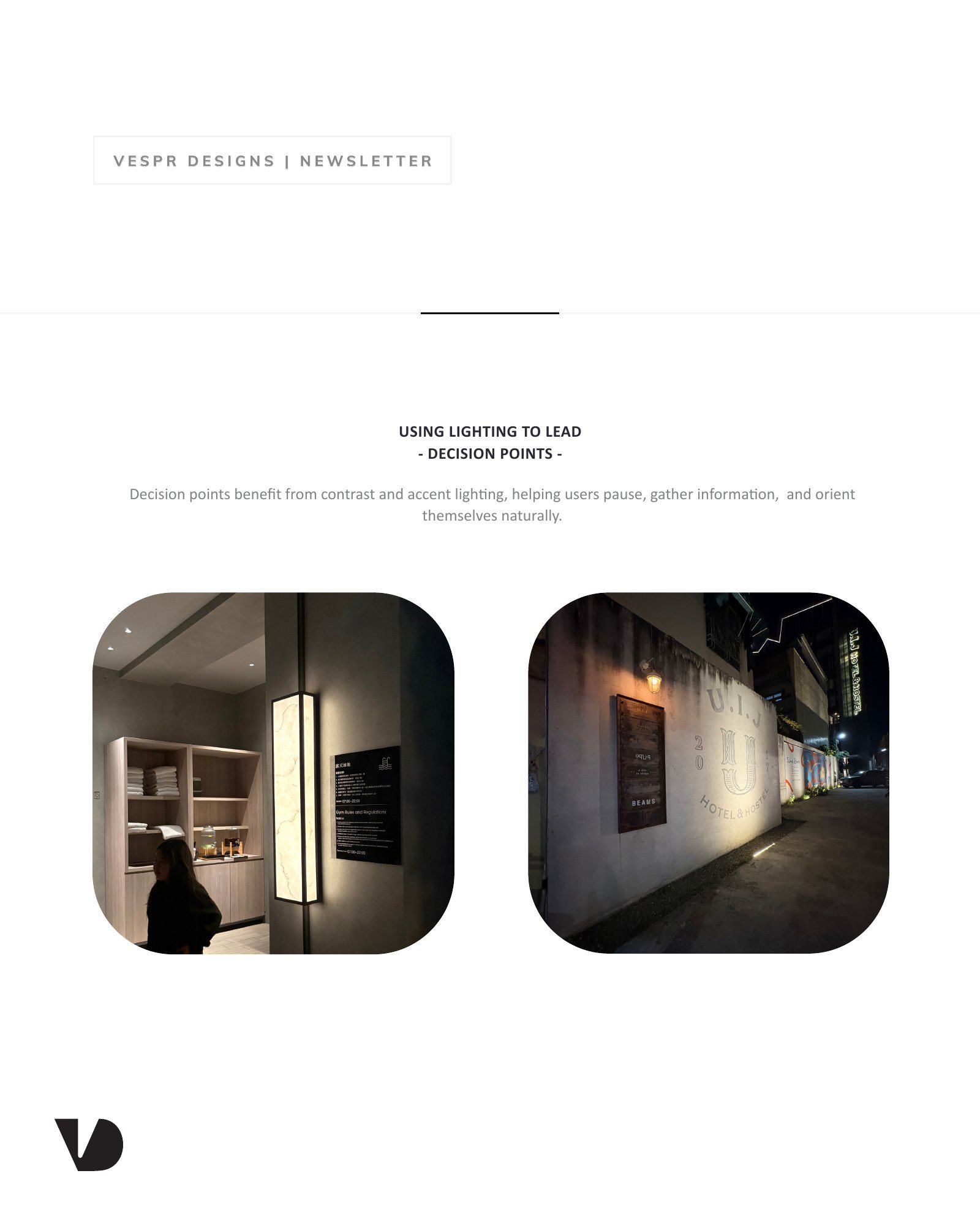
Using Lighting to Lead: Decision Points
Decision points benefit from contrast and accent lighting, helping users pause, gather information, and orient themselves naturally.
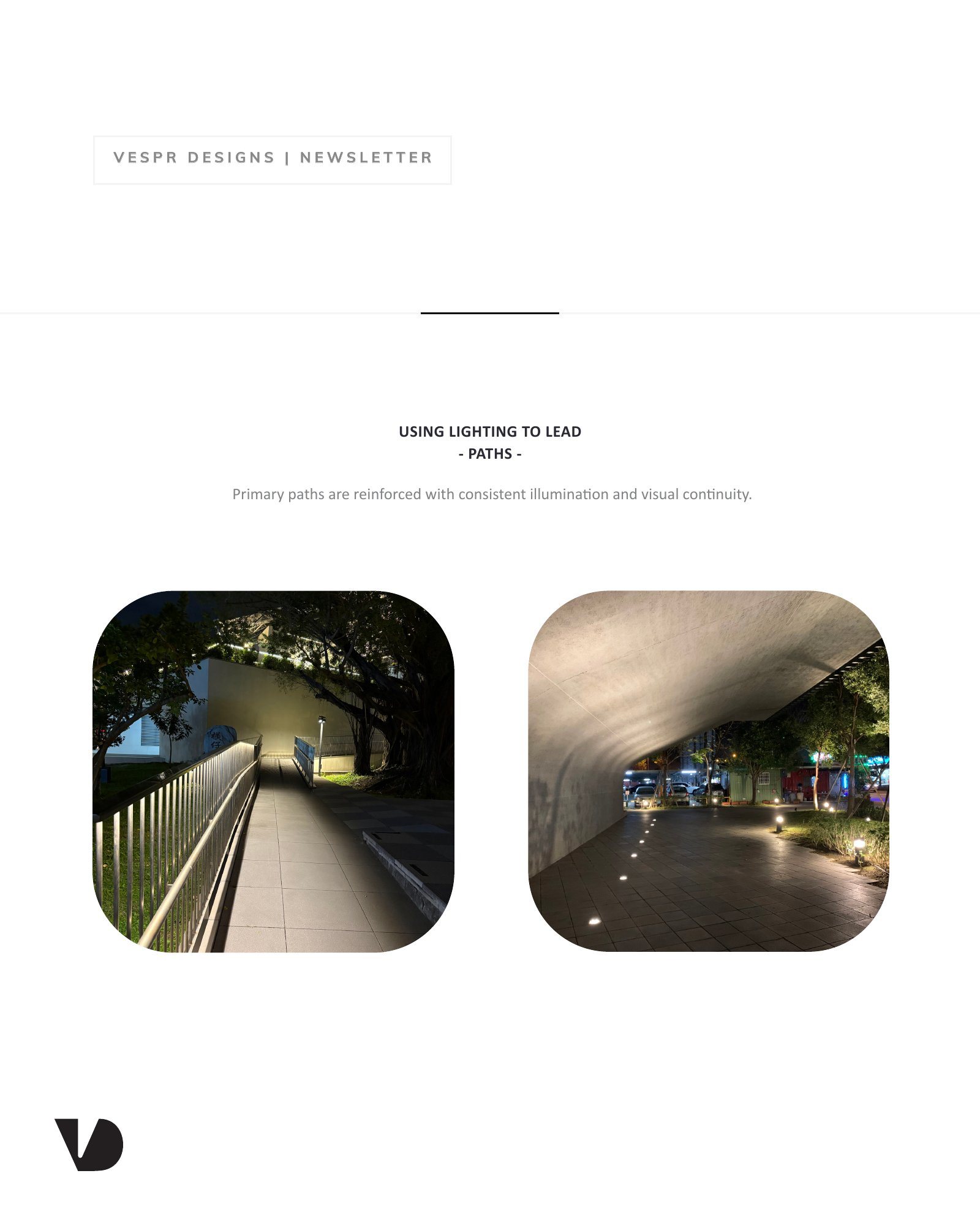
Using Lighting to Lead: Paths
Primary paths are reinforced with consistent illumination and visual continuity.
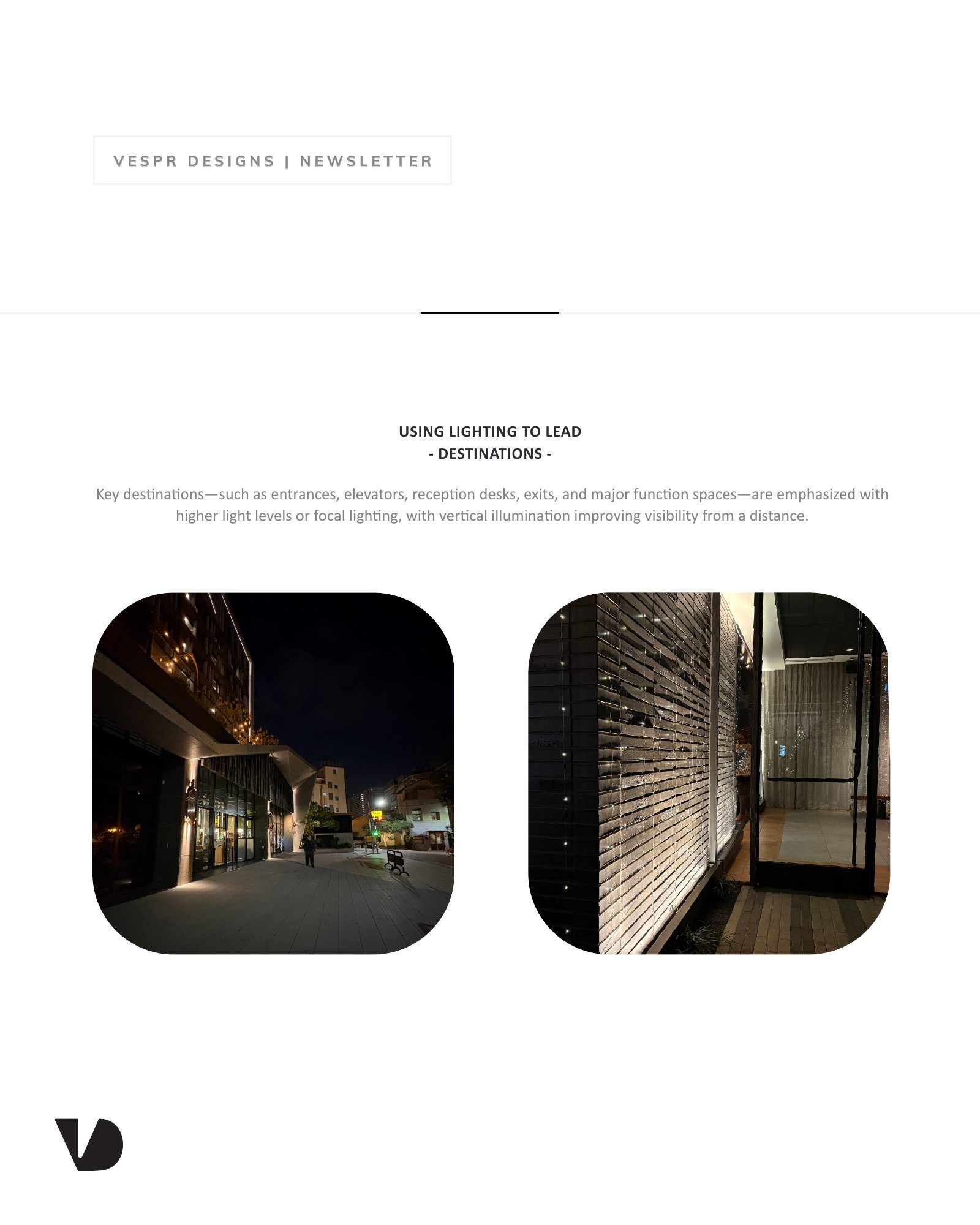
Using Lighting to Lead: Destinations
Key destinations, such as entrances, elevators, reception desks, exits, and major function spaces, are emphasized with higher light levels or focal lighting, with vertical illumination improving visibility from a distance.
Using Lighting to Lead: Ceiling Lighting
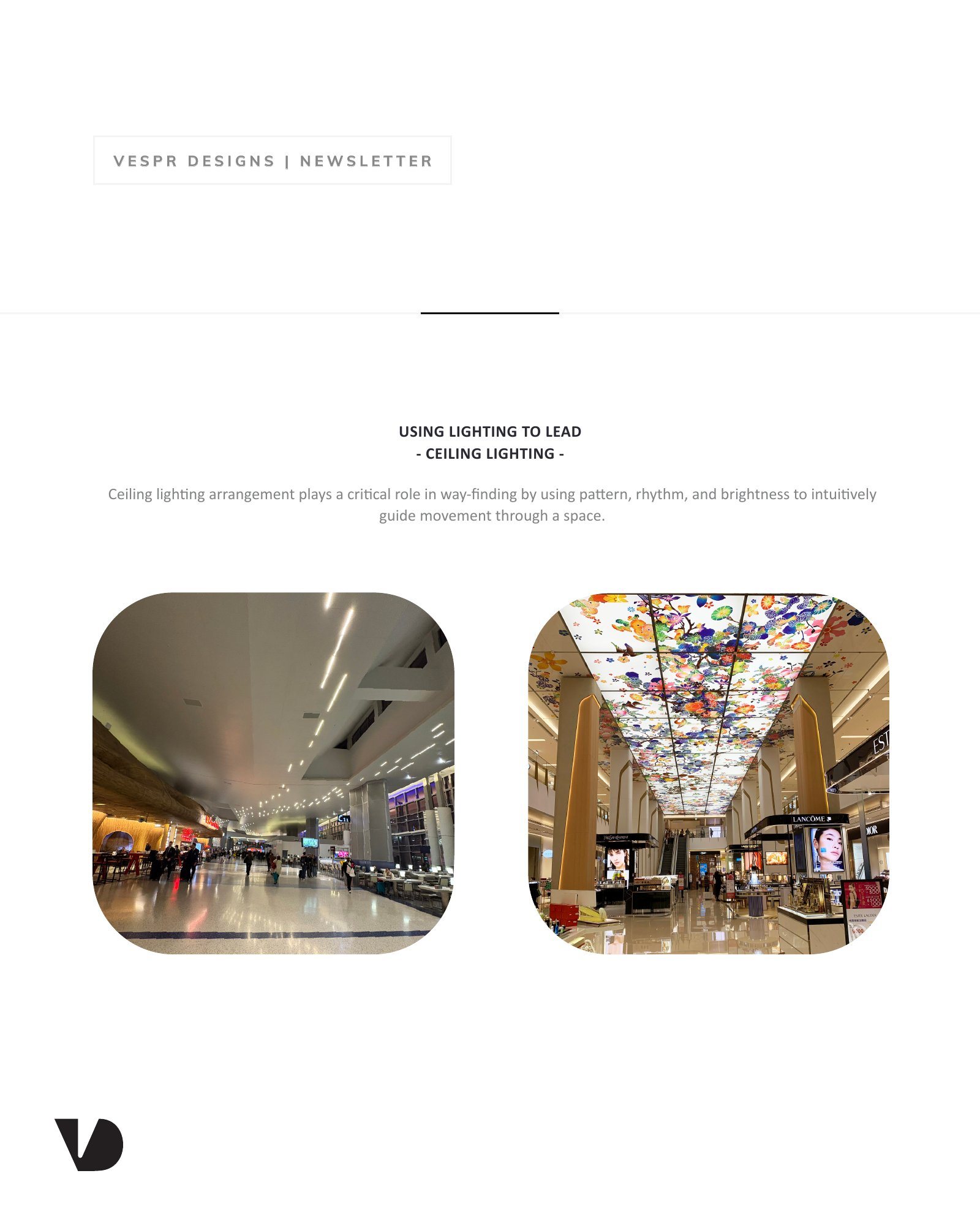
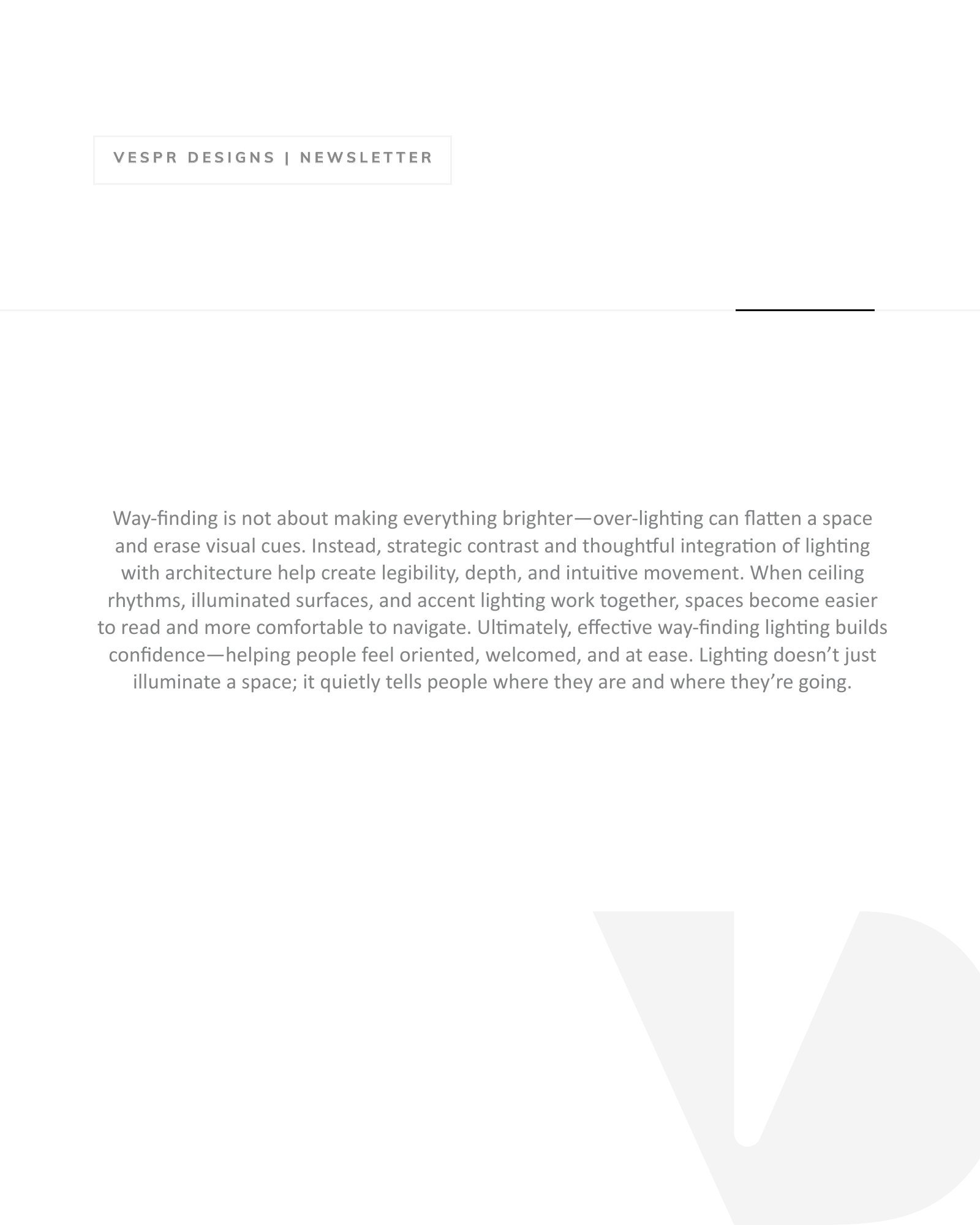
Ceiling lighting arrangement plays a critical role in wayfinding by using pattern, rhythm, and brightness to intuitively guide movement through a space.
Wayfinding is not about making everything brighter, over-lighting can flatten a space and erase visual cues. Instead, strategic contrast and thoughtful integration of lighting with architecture help create legibility, depth, and intuitive movement. When ceiling rhythms, illuminated surfaces, and accent lighting work together, spaces become easier to read and more comfortable to navigate. Ultimately, effective wayfinding lighting builds confidence, helping people feel oriented, welcomed, and at ease. Lighting doesn’t just illuminate a space; it quietly tells people where they are and where they’re going.
See the original newsletter (6 pages)